Advertisement

This page describes the land, economy, culture, and religions of the New England Colonies
The New England Colonies were New Hampshire, Massachusetts, Rhode Island, and Connecticut. Located in the northeastern part of the 13 Colonies, the region was known for rocky soil, cold winters, busy seaports, shipbuilding, fishing, trade, and the strong influence of Puritan communities.
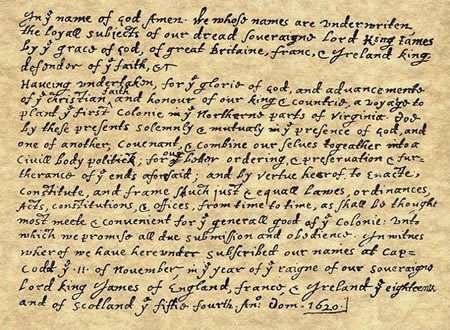
Mayflower Compact
Which Colonies Were the New England Colonies?
New England Colonies at a Glance
| Colony | Economy and Resources | Religion and Culture | Important Features |
|---|---|---|---|
| New Hampshire | Fishing, timber, shipbuilding, farming, and trade | Puritan influence was present, especially in settled coastal communities | Forests, rivers, and access to the Atlantic supported timber and maritime industries |
| Massachusetts | Fishing, shipbuilding, trade, crafts, and small farms | Puritanism strongly influenced government and daily life | Boston became one of colonial America's most important ports |
| Rhode Island | Trade, fishing, shipbuilding, and small-scale farming | Known for greater religious freedom and separation of church and government | Founded in part by religious dissenters, including Roger Williams |
| Connecticut | Farming, livestock, trade, and crafts | Puritan communities were influential | The Connecticut River Valley provided better farmland than much of New England |
Climate and Geography of the New England Colonies
Colonists in the New England Colonies experienced cold winters and mild summers. Land near the coast was often relatively flat, while areas farther inland became hilly and mountainous. Much of the soil was rocky and less fertile than the soil found in the Middle and Southern Colonies.
New England's long coastline, natural harbors, forests, and rivers helped shape the region's economy. Although farming was possible, especially in places such as the Connecticut River Valley, many New England colonists depended heavily on the Atlantic Ocean and the region's timber resources.
Why Was Farming Difficult in New England?
Farming was difficult in much of New England because the soil was often rocky and the growing season was shorter than in colonies farther south. Cold winters limited the amount of time farmers had to grow crops, and many farms were smaller than those in the Middle and Southern Colonies.
Because large-scale farming was difficult in many areas, colonists developed other ways to make a living. Fishing, shipbuilding, trade, logging, and crafts became especially important parts of the New England economy.
Religion in the New England Colonies
Religion played an important role in many New England communities. Puritans, who wanted to reform the Church of England, became especially influential in Massachusetts. Religious beliefs shaped government, education, family life, and community expectations.
Puritan communities often enforced strict religious and social rules, and people who challenged those beliefs could face serious consequences. Religious dissent helped lead to the founding of new colonies. Roger Williams, for example, supported greater religious freedom and helped establish Rhode Island.
The Pilgrims, a Separatist group that settled Plymouth Colony in 1620, were also an important part of early New England history. Over time, Plymouth became part of Massachusetts.
Learn more about life in Puritan Massachusetts.
Economy of the New England Colonies
New England's economy depended heavily on the Atlantic Ocean and the region's natural resources. Fishing, especially for cod, was an important industry. Whaling, shipbuilding, logging, trade, and skilled crafts also contributed to the region's economy.
New England's forests supplied timber for ships and buildings, while coastal towns developed busy harbors that connected the colonies to markets throughout the Atlantic world. Boston became one of the most important commercial centers in colonial America.
New England and the Atlantic Slave Trade
Some New England merchants and shipowners participated in the Atlantic slave trade and in trading networks that connected New England, Africa, the Caribbean, Europe, and other parts of the Americas. Enslaved Africans were forcibly transported across the Atlantic, while commodities such as rum, molasses, sugar, and other goods moved through these trading networks.
These exchanges are often described in textbooks as part of "triangular trade," although actual Atlantic trade routes were more complex than a single triangle. Profits from shipping and commerce contributed to the wealth of some New England merchants and ports.
How Were the New England Colonies Different from the Other Colonial Regions?
| Region | Geography | Economy | Religion and Society |
|---|---|---|---|
| New England Colonies | Rocky soil, forests, cold winters, and a long coastline | Fishing, shipbuilding, trade, logging, crafts, and small farms | Puritan influence was especially strong in Massachusetts and Connecticut |
| Middle Colonies | Fertile farmland, rivers, good harbors, and a moderate climate | Grain farming, trade, shipping, manufacturing, and crafts | Especially diverse in religion, ethnicity, and culture |
| Southern Colonies | Long growing seasons, fertile coastal plains, and warm climate | Agriculture, including major cash crops | Plantation agriculture strongly influenced society and settlement |
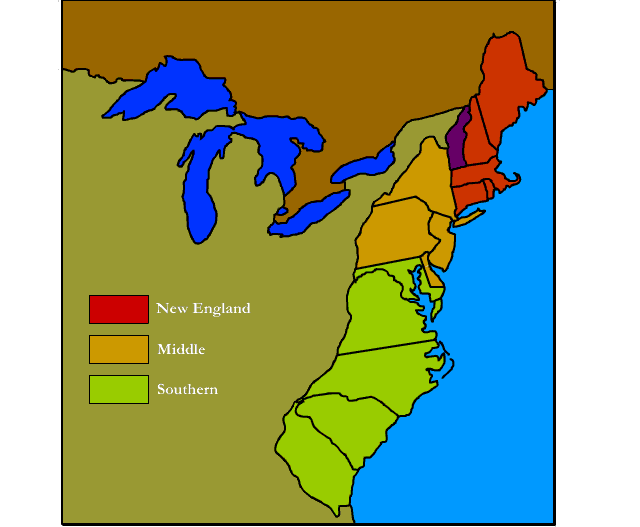
Regions of the 13 Colonies
Explore the Three Regions of the 13 Colonies
New England and 13 Colonies Activities
Continue learning about New England and the other colonial regions with these interactive activities and classroom resources.
- New England Colonies Correct-Me Passage
- 13 Colonies Regions Categorization by Colony
- 13 Colonies Regions Categorization by Fact
- Middle Colonies Correct-Me Passage
- Southern Colonies Correct-Me Passage
More Articles About Life in the 13 Colonies
- Life in Puritan Massachusetts
- Who Were the Quakers?
- Tobacco in the Southern Colonies
- History of Cotton in America
- Indigo in the South Carolina Colony
- Highlights of a Colonial Town: Williamsburg
13 Colonies Reading Comprehension Activities
- Life in Puritan Massachusetts Reading Passage and Critical Thinking Questions - Printable
- Life in Puritan Massachusetts Reading Passage and Critical Thinking Questions - Online
- Who Were the Quakers? Reading Passage and Critical Thinking Questions - Printable
- Who Were the Quakers? Reading Passage and Critical Thinking Questions - Online
- Tobacco in the Southern Colonies Reading Passage and Critical Thinking Questions - Printable
- Tobacco in the Southern Colonies Reading Passage and Critical Thinking Questions - Online
- History of Cotton Reading Passage and Critical Thinking Questions - Printable
- History of Cotton Reading Passage and Critical Thinking Questions - Online
- Religion in the 13 Colonies Compare-and-Contrast Reading Comprehension
Teaching the 13 Colonies?
Use the free activities above, then explore additional interactive games, reading-comprehension activities, maps, printable resources, and subscriber-only 13 Colonies materials for deeper practice and classroom use.
Advertisement

Related activities
Advertisement