Advertisement
History-based Writing Prompts and Critical Thought Exercises
This section contains activities and resources related to fun and meaningful writing prompts.
An Eye for an Eye - the John Brown Rebellion Writing Prompt
Description: This activity requires students to consider and write about the idea of "an eye for an eye."
Alexander Hamilton Writing Prompt: Settling the Score
Description: This prompt requires students to help Hamilton and Burr find a more productive way to settle their differences instead of staging a duel.
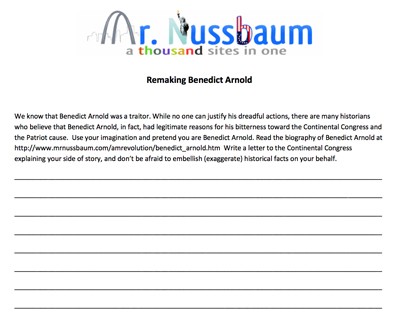
Charter Oak Writing Prompt
Description: This writing prompt describes Connecticut's legendary Charter Oak and then requires students to relate a great hiding spot of their own.
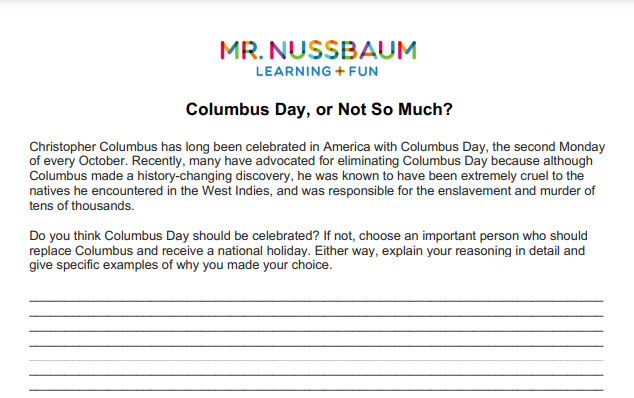
Columbus Day, or, Not So Much
Description: This writing prompt requires students to determine whether or not Columbus should get his own holiday, and if not, what famous person should replace him and why?
Demoralizing the Enemy - Sherman's March
Description: This writing prompt requires students to relate to Sherman's "scorched earth" warfare during his march through Georgia by writing about a time that their team crushed an opponent, or, when they were on a team that was crushed by an opponent.
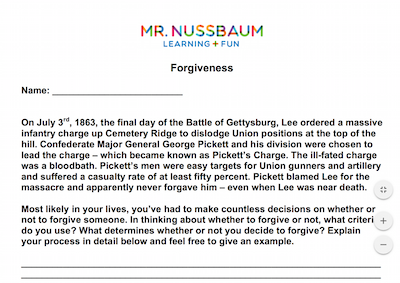
Forgiveness - A Civil War Writing Prompt
Description: Following the ill-fated infantry charge known as Pickett's Charge, on the last day of Gettysburg, Confederate Major General George Pickett was said to have harbored a life-long bitterness toward Robert E. Lee, who ordered the charge. This writing prompt requires students to think about the concept of forgiveness and describe the process he or she goes through when deciding whether or not to forgive someone.
George Washington Carver Writing Prompt - Who would you name yourself after?
Description: Did you know that George Washington Carver was originally born as George Carver? He gave himself the middle name “Washington” following World War I, in honor of Booker T. Washington. His name was not meant to honor the former slaveholder and founding father, George Washington. Imagine if you could re-name yourself after a figure in history? Who would you name yourself after and why? Give specific details that support your answer. If you can’t think of a historical figure, think of a character in the movies or literature.
Henry Clay - The Peacemaker
Description: This prompt describes the role Henry Clay played in brokering the Missouri Compromise and the Compromise of 1850 and then asks students to write about a time that they've played "peacemaker."
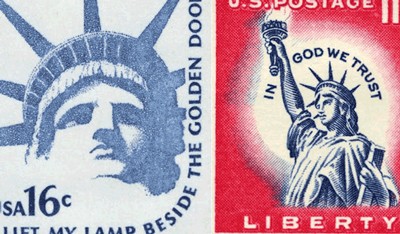
Interview with the Statue of Liberty
Description: This fun activity requires students to pretend they are interviewing the Statue of Liberty! In the interview, there are four scripted questions that the student has to answer as the Statue. Two questions are fun and two are serious. The student comes up with the last question and answer. Students can use the Statue of Liberty of informational passage as a reference.
Is Recess an Unalienable Right? - Declaration of Independence
Description: This writing prompt requires students to understand the concept of unalienable rights and then to form a persuasive essay on whether recess is a right or privilege that teachers should be able to take away.
John Smith Meets 21st Century Symbols and Lingo
Description: This fun writing activity requires students to role play as John Smith, writing a summary of his experiences in Jamestown to an editor writing a book. The fun part for students, is that they are encouraged to use 21st century lingo such as "sus," "bro" and symbols and abbreviations such as LOL, SMH, and #.
Lee's Greatest Victory at Chancellorsville - Writing Prompt
Description: This activity requires students to relate to Lee's "Greatest Victory" at Chancellorsville, by describing their greatest moment at sports, music, dance, or even video games.
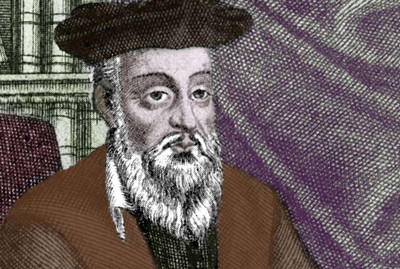
Nostradamus - Soothsayer
Description: This fun social studies prompt requires students to play the role of Nostradamus by writing a Nostradamus-style quatrain about a historical event they've learned.
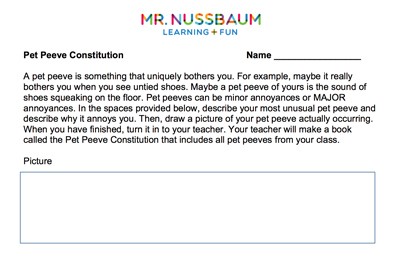
Pet Peeve Constitution
Description: This fun activity requires students to write and draw about a unique pet peeve of theirs. Teachers can compile student pet peeve activities to make a Pet Peeve Constitution.
Redemption
Description: This writing activity requires students to explore the concept of redemption and to describe an antagonist in movies or literature who is ultimately redeemed.
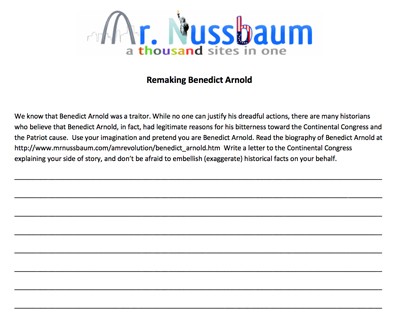
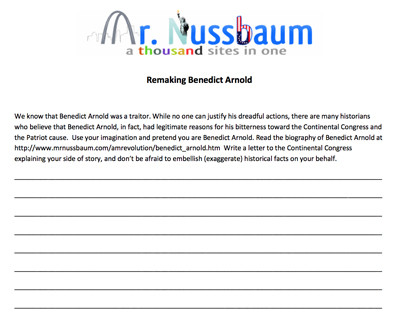
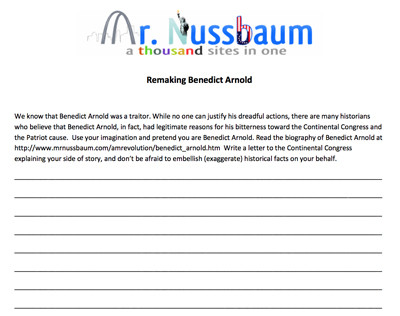
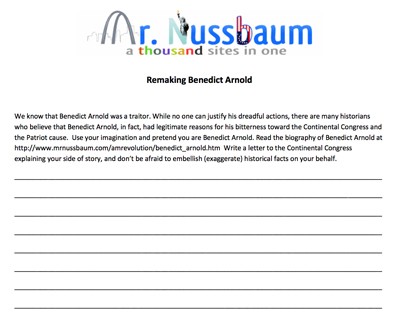
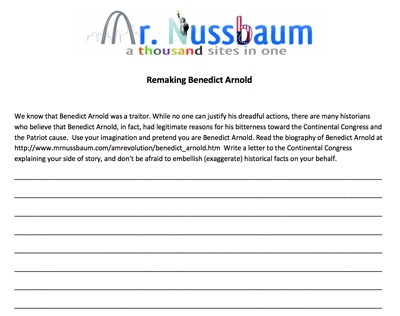
Remaking Benedict Arnold
Description: This prompt requires students to examine the life of Benedict Arnold and to write a letter than attempts to redeem him in American history. The prompt ENCOURAGES students to use hyperbole, perspective, and to downplay facts not favorable to Arnold in this argument. Use the Benedict Arnold biography for background information on the steps that led Arnold to reason.
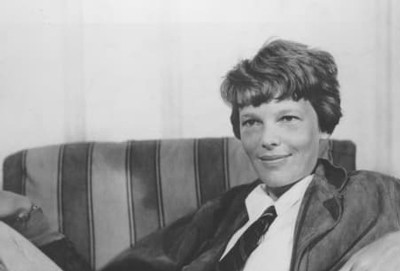
Re-Writing History: An alternative ending to the Amelia Earhart Story.
Description: This writing prompt require students to come up with an alternative ending to the Amelia Earhart story. Very fun!
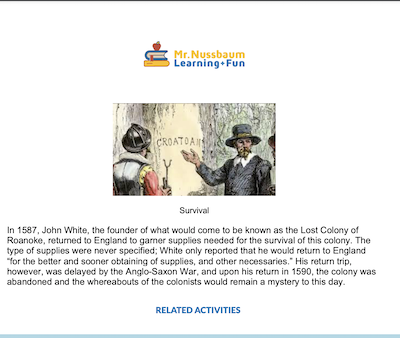
Roanoke Island - the Anatomy of a Mystery
Description: This fun writing prompt requires students to analyze the mystery of the Lost Colony before detailing a mystery in their own lives, or, another mystery they're familiar with in history, literature, movies, video games, or current events.
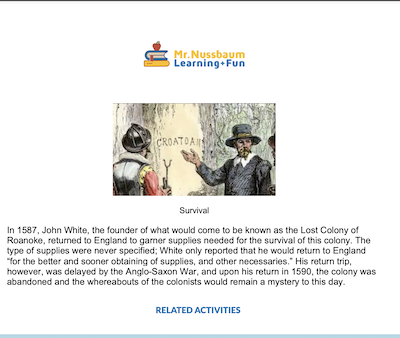
Roanoke Island - Supplies for Survival
Description: This fun critical thinking exercise requires students to role play as a Roanoke settler, who has the magical power to warp to the future to garner modern supplies. There are rules, however, that students must follow in selecting three supplies that they would bring to Roanoke that would help the colony survive.
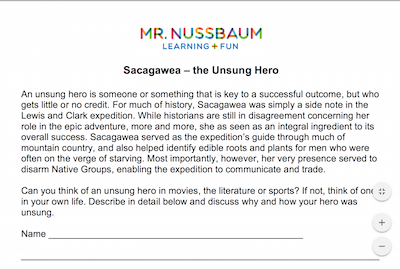
Sacagawea - the Unsung Hero
Description: This activity explains the idea of Sacagawea as an unsung hero. Students must then write about an unsung hero they select from movies, literature, sports, or their own lives.
Scurvy - A Simple, But Elusive Explanation
Description: This activity requires students to write about a modern mystery that they think will be solved by humans in the future - in the same way that the cause of Scurvy was a mystery for hundreds of years.
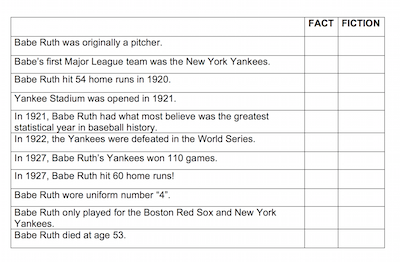
Should Abner Doubleday Really be Credited with Inventing Baseball? - Persuasive Essay Printable
Description: This activity requires students to read the narrative about Abner Doubleday and Alexander Joy Cartwright and to determine who deserves more credited for creating the game of baseball.
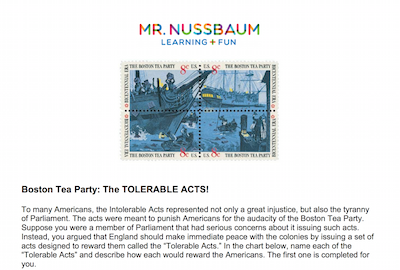
Unfair Punishments - A Boston Tea Party Writing Prompt
Description: This writing prompts requires students to relate to the unfair punishments issued to the American colonists after the Boston Tea Party by detailing the most unfair punishment they've ever experienced, and the reasons why they were punished.
The 82-year-long Grudge: The Siege at Vicksburg
Description: This writing prompt describes the “grudge” the citizens of Vicksburg, Mississippi held against the United States Government after the fall of their city in July of 1863. Independence Day was not celebrated in the Mississippi River town until after World War II. This writing prompt requires students to describe a grudge they have had, or, to describe one in literature, or sports, or if someone has had a grudge against them.
"The Climb" - Lewis and Clark
Description: This printout requires students to consider a time when they thought they were at the cusp of finishing something great, only to learn there was MUCH more work to do - ALA Miley Cyrus.
The Glaring Weakness of the Articles of Confederation - Writing Prompt
Description: This prompt outlines the major weaknesses of the Articles of Confederation and requires students to choose and explain the most "glaring" weakness.
The Great Squander at the Battle of Antietam
Description: This historical prompt challenges students to consider the great opportunities squandered by Union General George McClellan prior to Antietam. Then, to think of and write about a time when they may have squandered a "golden" opportunity.
The Greatest Mythical Place Ever - Writing Prompt
Description: Based on the Iroquoian explanation of the Kingdom of Saguenay to Jacques Cartier, students must describe and draw the greatest mythical place they have ever experienced in a book, movie, or video game! Very fun and engaging.
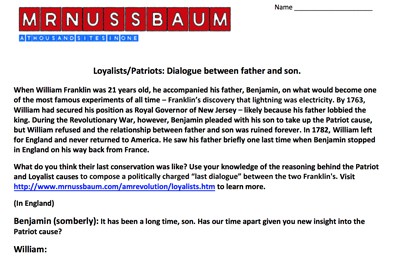
The Last Conversation Between Ben and William Franklin
Description: This activity requires students to pen dialogues between William (Ben's loyalist son and royal governor of New Jersey) and Benjamin (a Patriot). Students should demonstrate their knowledge of Loyalist and Patriot sentiments through the dialogue.
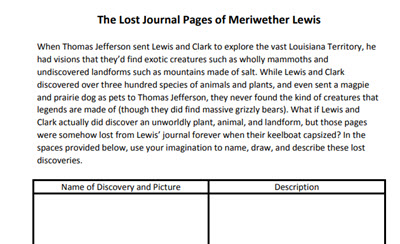
The Lost Journal Pages of Meriwether Lewis
Description: When Thomas Jefferson sent Lewis and Clark to explore the vast Louisiana Territory, he had visions that they’d find exotic creatures such as wholly mammoths and undiscovered landforms such as mountains made of salt. While Lewis and Clark discovered over three hundred species of animals and plants, and even sent a magpie and prairie dog as pets to Thomas Jefferson, they never found the kind of creatures that legends are made of (though they did find massive grizzly bears). What if Lewis and Clark actually did discover an unworldly plant, animal, and landform, but those pages were somehow lost from Lewis’ journal forever when their keelboat capsized? In the spaces provided below, use your imagination to name, draw, and describe these lost discoveries.
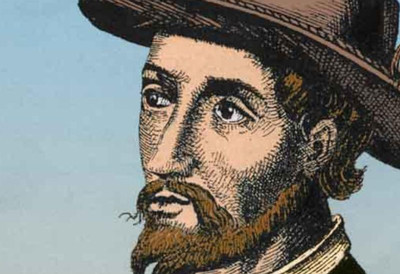
The Slander of Ponce de Leon and the False Search for the Fountain of Youth
Description: This writing prompt explains that Ponce de Leon's search for the Fountain of Youth was made up by those who wished to embarrass him. It then requires students to write about an instance in which they may have experienced slander, or, when a character in literature or movies experienced it.
The Storm that Saved Washington
Description: This activity describes the unbelievable tornado that hit Washington D.C. as the British were attempting to destroy the city at the end of the War of 1812. It challenges students to role play as a spectator who describes the scene to a newspaper reporter.
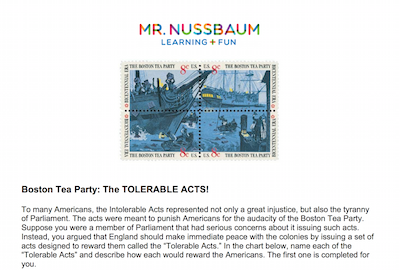
The Tolerable Acts - Having Fun With the Intolerable Acts
Description: Students play the role as a member of Parliament who has serious concerns about the Intolerable Act. Instead, he or she argues that England should make immediate peace with the colonies by issuing a set of acts designed to reward them called the “Tolerable Acts.” Students must think of five acts that reward the colonists (such as Parliament erecting a statue of George Washington in front of Buckingham Palace).
The Underdog - Writing Prompt
Description: This prompt outlines describes the concept of the underdog and how the Americans were underdogs during the Revolutionary War. Students must write about a time when they were the underdog, or, about a character in literature, movies, or sports, that won as the underdog.
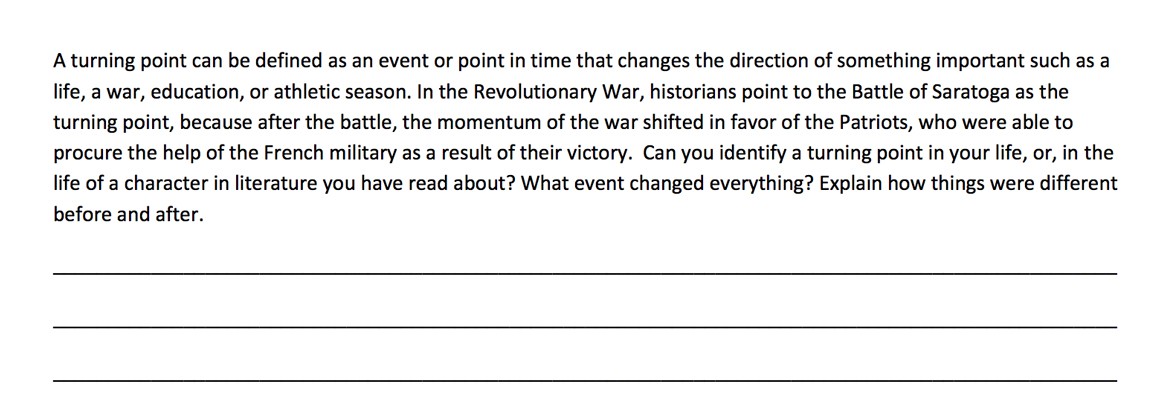
Turning Point - The Battle of Saratoga
Description: This activity requires students to understand how the Battle of Saratoga was the turning point in the war and to think of explain turning points in their own lives, in sports, or in the lives of literary characters.
The Worst Rule Ever - Royal Proclamation of 1763
Description: This fun prompt requires students to relate to how the colonists must have felt after the passage of the Royal Proclamation of 1763, by writing about the worst rule they've ever had to follow.
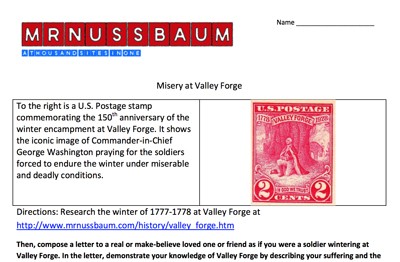
Valley Forge Writing Prompt - Role Play as a Continental Soldier
Description: This activity requires students to play the role of a soldier camped during the dreadful winter of 1777-78 at Valley Forge. Students must use their knowledge of the conditions and morale at Valley Forge to pen a letter to a friend or family member describing the misery.
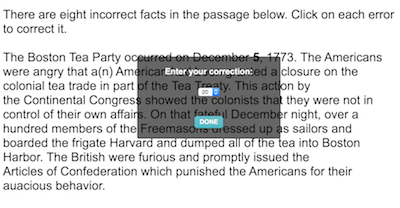
Was Christopher Columbus Overrated in History?
Description: This writing prompt requires students to consider an argument that Christopher Columbus was overrated in history. It then asks students to write about something they consider overrated.
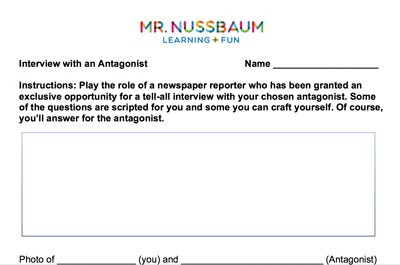
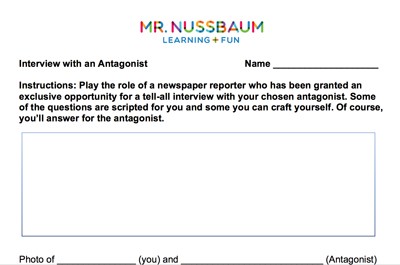
Interview with an Antagonist
Description: This fun activity requires students to conduct an interview with a chosen antagonist. Of course, the students must pen thoughtful answers on behalf of the antagonist. Some of the questions are pre-scripted while the student has the opportunity to think of questions too. Students must also draw and color a picture of themselves with their chosen antagonist.
Legislative Branch - Deep Thought Questions
Description: The printable narrative that describes the powers of Congress includes four short-answer questions regarding the main ideas of the article content, critical thought about the content, and vocabulary from the passage.
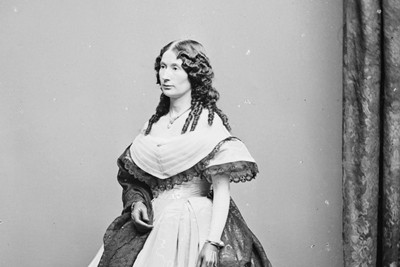
Ms. Laura Keene - Deep Thought Questions
Description: The printable narrative that describes the role Ms. Laura Keene played after Lincoln's assassination. It includes three short-answer questions regarding the main ideas of the article content, critical thought about the content, and vocabulary from the passage.
Dr. Samuel Mudd - Deep Thought Questions
Description: The printable narrative that describes the role Dr. Mudd played after Lincoln's assassination. It includes three short-answer questions regarding the main ideas of the article content, critical thought about the content, and vocabulary from the passage.
Anne Sullivan - Deep Thought Questions
Description: The printable narrative describes the life of Anne Sullivan. It includes three short-answer questions regarding the main ideas of the article content, critical thought about the content, and vocabulary from the passage.
The Execution of Mary Surratt - Deep Thought Questions
Description: This printable narrative describes the circumstances in the Mary Surratt execution . It includes four short-answer questions regarding the main ideas of the article content, critical thought about the content, and vocabulary from the passage.
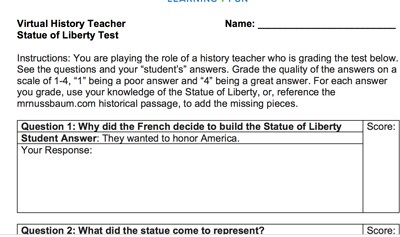
Virtual History Teacher - Grading a Harriet Tubman Test
Description: Students play the role of a virtual history teacher and must grade responses to three questions about the life of Harriet Tubman. Each response is incomplete, and students must fill in the missing information in the "response" section. Students can use the Harriet Tubman biography for reference.
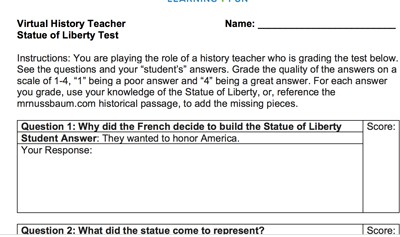
Virtual History Teacher - Grading an Amelia Earhart Test
Description: Students play the role of a virtual history teacher and must grade responses to three questions about the life of Amelia Earhart. Each response is incomplete, and students must fill in the missing information in the "response" section. Students can use the Amelia Earhart biography for reference.
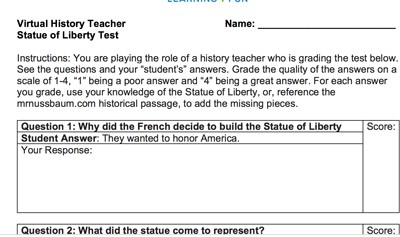
Virtual History Teacher - Grading a Statue of Liberty Test
Description: Students play the role of a virtual history teacher and must grade responses to three questions about the Statue of Liberty. Each response is incomplete, and students must fill in the missing information in the "response" section. Students can use the Statue of Liberty historical passage for reference.
Virtual History Teacher - Grading a George Washington Test
Description: Students play the role of a virtual history teacher and must grade responses to three questions about the life of George Washington. Each response is incomplete, and students must fill in the missing information in the "response" section. Students can use the George Washington biography for reference.
Virtual History Teacher - Grading a Thomas Jefferson Test
Description: Students play the role of a virtual history teacher and must grade responses to three questions about the life of Thomas Jefferson. Each response is incomplete, and students must fill in the missing information in the "response" section. Students can use the Thomas Jefferson biography for reference.
Virtual History Teacher - Hank Aaron Test
Description: Students play the role of a virtual history teacher and must grade responses to three questions about the life of Hank Aaron. Each response is incomplete, and students must fill in the missing information in the "response" section. It's designed to reinforce the importance of elaboration. Students can use the Hank Aaron biography for reference.
Virtual History Teacher - Crispus Attucks Test
Description: Students play the role of a virtual history teacher and must grade responses to three questions about the life of Crispus Attucks. Each response is incomplete, and students must fill in the missing information in the "response" section. It's designed to reinforce the importance of elaboration. Students can use the Crispus Attucks biography for reference.
Virtual History Teacher - Benjamin Banneker
Description: Students play the role of a virtual history teacher and must grade responses to three questions about the life of Benjamin Banneker. Each response is incomplete, and students must fill in the missing information in the "response" section. It's designed to reinforce the importance of elaboration. Students can use the Benjamin Banneker biography for reference.
Virtual History Teacher - Ruby Bridges
Description: Students play the role of a virtual history teacher and must grade responses to three questions about the life of ruby Bridges. Each response is incomplete, and students must fill in the missing information in the "response" section. It's designed to reinforce the importance of elaboration. Students can use the Ruby Bridges biography for reference.
Virtual History Teacher - George Washington Carver
Description: Students play the role of a virtual history teacher and must grade responses to three questions about the life of George Washington Carver. Each response is incomplete, and students must fill in the missing information in the "response" section. It's designed to reinforce the importance of elaboration. Students can use the George Washington Carver biography for reference.
Virtual History Teacher - Frederick Douglass
Description: Students play the role of a virtual history teacher and must grade responses to three questions about the life of Frederick Douglass. Each response is incomplete, and students must fill in the missing information in the "response" section. It's designed to reinforce the importance of elaboration. Students can use the Frederick Douglass biography for reference.
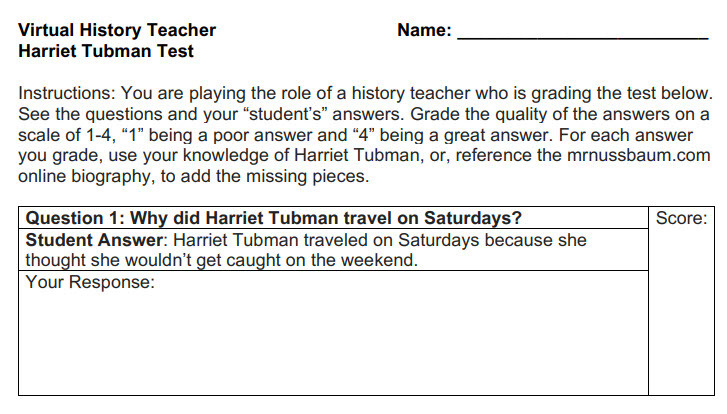
Virtual History Teacher - Grading a Roberto Clemente Test
Description: Students play the role of a virtual history teacher and must grade responses to three questions about the life of Roberto Clemente. Each response is incomplete, and students must fill in the missing information in the "response" section. Students can use the Roberto Clemente biography for reference.
Virtual History Teacher - Grading a Boston Massacre Test
Description: Students play the role of a virtual history teacher and must grade responses to three questions about the Boston Massacre. Each response is incomplete, and students must fill in the missing information in the "response" section. Students can use the Boston Massacre narrative for reference.
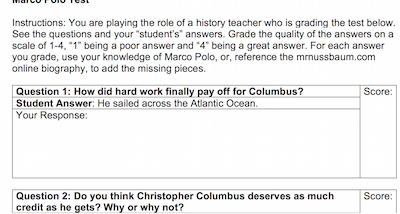
Marco Polo Virtual History Teacher
Description: Students play the role of a virtual history teacher and must grade responses to three questions about Marco Polo. Each response is incomplete, and students must fill in the missing information in the "response" section. Students can use the Marco Polo biography for reference.
Virtual History Teacher - Grading a Boston Tea Party Test
Description: Students play the role of a virtual history teacher and must grade responses to three questions about the Boston Tea Party. Each response is incomplete, and students must fill in the missing information in the "response" section. Students can use the Boston Tea Party narrative for reference.
Christopher Columbus - Virtual History Teacher
Description: Students play the role of a virtual history teacher and must grade responses to three questions about Christopher Columbus. Each response is incomplete, and students must fill in the missing information in the "response" section. Students can use the Christopher Columbus biography for reference.
Ferdinand Magellan - Virtual History Teacher
Description: Students play the role of a virtual history teacher and must grade responses to three questions about Ferdinand Magellan. Each response is incomplete, and students must fill in the missing information in the "response" section. Students can use the Ferdinand Magellan biography for reference.
Jacques Cartier - Virtual History Teacher
Description: Students play the role of a virtual history teacher and must grade responses to three questions about Jacques Cartier. Each response is incomplete, and students must fill in the missing information in the "response" section. Students can use the Jacques Cartier biography for reference.
Advertisement