Advertisement

This page discusses the realities and myths of what would become the holiday of Thanksgiving.
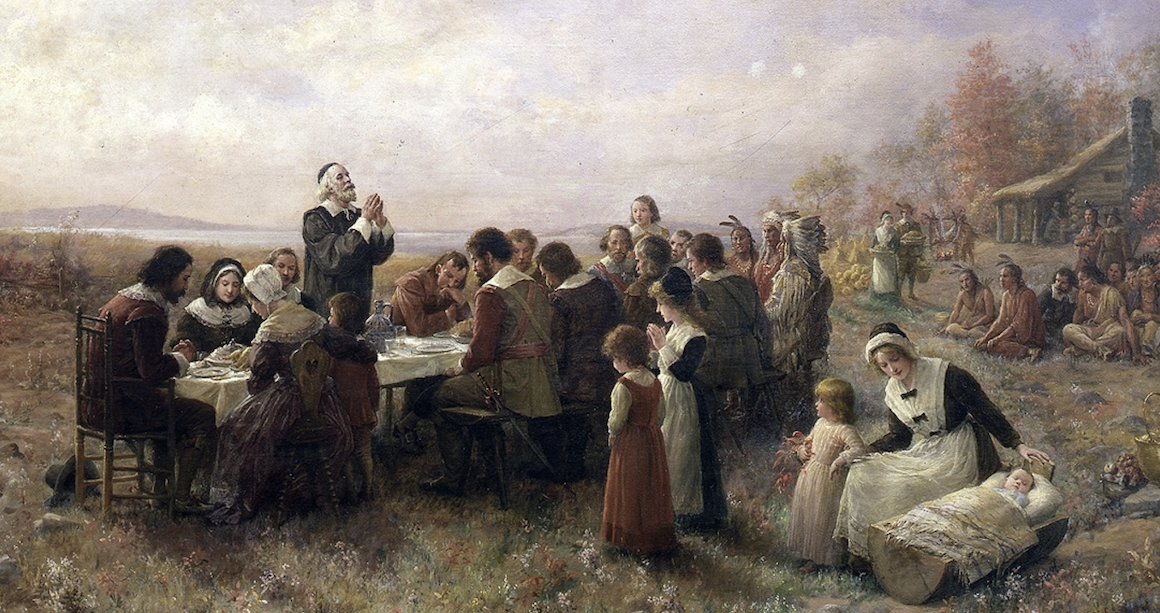
The First Thanksgiving at Plymouth (1914) Jennie Augusta Brownscomb
Introduction
The story of the first Thanksgiving, a harvest feast shared between Pilgrims and Native Americans in 1621, has become ingrained in American folklore and is celebrated annually as a symbol of unity and gratitude. However, as with many historical events, the accuracy of the first Thanksgiving has been subject to scrutiny and debate.
The Historical Context
In the early 17th century, European settlers known as Pilgrims arrived in Plymouth, Massachusetts, seeking religious freedom. They encountered indigenous people, including the Wampanoag tribe, who had inhabited the region for thousands of years. The first Thanksgiving is traditionally believed to have occurred in 1621, after the Pilgrims' first successful harvest in the New World.
Primary Sources and Accounts
The primary source for the first Thanksgiving is a letter written by Edward Winslow, one of the Pilgrims present at the event. In his letter dated December 11, 1621, Winslow describes a three-day feast attended by Pilgrims and around 90 Wampanoag warriors, led by Chief Massasoit. The feast included various foods, such as venison, turkey, fish, and vegetables, and was marked by expressions of gratitude and camaraderie between the two groups.
Accuracy and Interpretation
While Winslow's account provides valuable insight into the first Thanksgiving, historians caution against taking it at face value. The letter was written with specific intentions, namely to attract more settlers to Plymouth and promote positive relations with the Native Americans. As such, it may not provide a fully accurate or unbiased portrayal of the event. Furthermore, the Wampanoag people do not consider Thanksgiving a joyous event. To them, the day in which most Americans celebrate Thanksgiving is a day of bloodshed and betrayal.
Historical Context and Cultural Nuances
To understand the first Thanksgiving more fully, it's essential to consider the historical context and cultural nuances of the time. While the feast may have been a genuine expression of goodwill between the Pilgrims and the Wampanoag, it occurred against a backdrop of colonial expansion, land dispossession, and conflict that would characterize relations between European settlers and Native Americans in the centuries to come.
Advertisement

Related activities
Advertisement