This section provides a complete description of the Inuit homes.
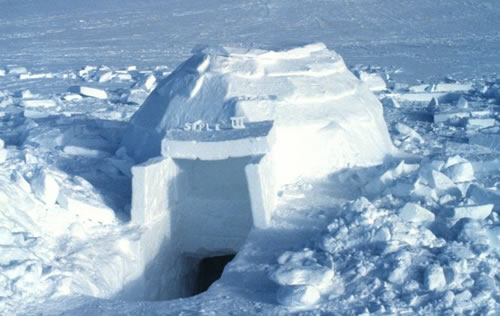
While many Inuit built igloos, others built homes out of whale bones and animal hides and insulated such homes with snow. When used as insulation for an igloo, the snow served to trap pockets of air within the igloo. Combined with the body heat of the inhabitants of the igloo, temperatures can be more than 100 degrees warmer inside an igloo that outside.
Igloos were built with wind-blown snow that was easily shaped and compacted into blocks. The gaps left in the ground when the ice blocks were removed would serve as the base of the igloo structure. Such "snowbricks" would be laid in stacked circles until a dome was created. The entrance of the igloo would be covered with animal skins to keep as much warm air in the igloo as possible. Sleeping quarters were little more than large, raised ice blocks covered with caribou skins. Additionally, the lighting of the igloo's stone lamp would cause slight melting within the igloo. When the lamp was extinguished, a re-freeze would occur, providing stability to the igloo structure.
|
|
|
Advertisement

Remove ad