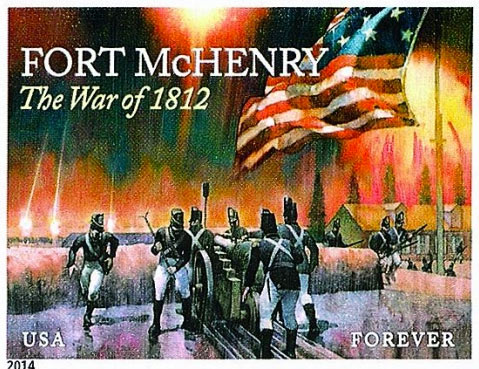
Causes of the War of 1812
The War of 1812 occurred between the United States and Great Britain between 1812 and 1814. America declared war on Great Britain for five reasons:
1.) Great Britain had violated American sovereignty by refusing to surrender western forts as promised in the Treaty of Paris after the Revolutionary War.
2.) Great Britain began stopping American sea vessels and forcing subjects on the vessels into the British military. This practice was called "impressment." The British justified the practice with the idea that American soldiers, once subjects of the King, were always subjects of the King.
3.) Great Britain issued a series of trade restrictions designed to disrupt American trade with France.
4.) Great Britain provided arms and support to Native Americans in the western frontiers who were attacking American settlers.
5.) Great Britain controlled much of Canada and many Americans simply wanted to expel the British from the North American continent and expand America's borders.
Effects of the War of 1812
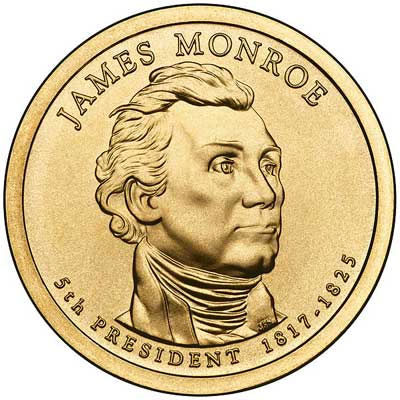 |
| James Monroe $1 Coin |
1.) The War of 1812 changed the course of American history. Because America had managed to fight the world's greatest military power to a virtual standstill, it gained international respect. Furthermore, it instilled a greater sense of nationalism among its citizens. It prompted James Monroe and John Quincy Adams to pen the Monroe Doctrine, the nation's first articulation of a foreign policy. The entire period of time after the War of 1812, during the presidency of James Monroe, is referred to as the "Era of Good Feeling" for the reasons above.
2.) The Federalist Party, founded by Alexander Hamilton, and once the dominant political party in America, declined precipitously following the War of 1812. Its members had opposed a war with Great Britain.
3.) While the War of 1812 had virtually no impact in England, it did assure the survival of the British colonies in Canada, and ultimately paved the way for the Canadian Confederation - the precursor to the nation of Canada. Some historians believe if the War of 1812 had not happened, Canada would have become part of the United States because so many Americans would have migrated north.