
Advertisement

This article describes the 1675-1676 Bacon's Rebellion in the Virginia Colony.
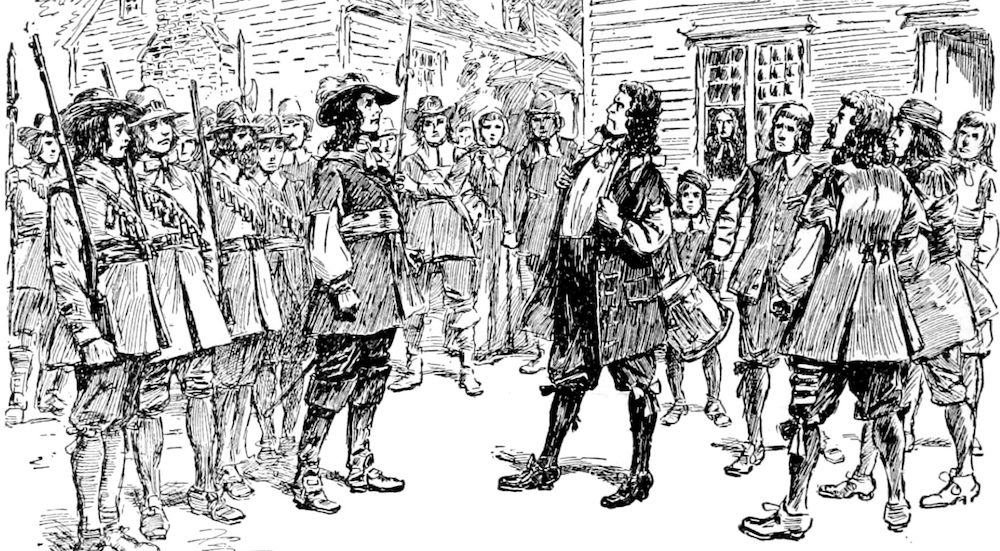 |
The Context of Bacon's RebellionTo understand the significance of Bacon's Rebellion, one must delve into the context of the time. Virginia in the late 17th century was a society marked by stark class divisions, with wealthy planters dominating the political and economic spheres while small farmers and indentured servants struggled to make ends meet. Additionally, tensions simmered between English settlers and Native American tribes, exacerbated by land disputes and violence on the frontier. The CatalystThe immediate trigger for Bacon's Rebellion was the perceived failure of the colonial government to adequately protect the frontier settlers from Native American attacks. Nathaniel Bacon, a wealthy planter, but also a relative newcomer to Virginia's elite circles, emerged as the leader of the discontented. He rallied a diverse coalition of settlers, including indentured servants, small farmers, and even some African slaves, who shared a common grievance against the colonial authorities. The Rebellion UnfoldsIn 1676, Bacon and his followers took matters into their own hands, launching a series of raids against Native American villages without authorization from the colonial government. Governor William Berkeley, who had previously ignored Bacon's pleas for action against the Native American threat, condemned the rebellion and declared Bacon a traitor. However, Bacon and his supporters marched on Jamestown, the colonial capital, forcing Berkeley to flee and burning the city to the ground. The AftermathDespite initial successes, Bacon's Rebellion ultimately faltered. Bacon himself died suddenly of dysentery, and without his leadership, the rebellion quickly unraveled. Governor Berkeley regained control, executing many of the rebellion's leaders and suppressing dissent with brutal force. However, the legacy of Bacon's Rebellion endured, leaving a lasting impact on colonial Virginia and beyond. Legacy and SignificanceBacon's Rebellion exposed the deep-seated social and economic tensions within colonial society. It highlighted the grievances of small farmers and indentured servants, who felt marginalized by the wealthy elite and neglected by the colonial government. In response to the rebellion, the Virginia House of Burgesses enacted laws to strengthen the institution of slavery, further entrenching the divide between the ruling class and the laboring poor. |
Advertisement

Related activities
Advertisement