Effects of World War I on... |
| Europe |
| Great Britain |
| France |
| Russia |
| Germany |
| The United States |
| The Balkans |
| Middle East |
-
Dissolution of the Ottoman Empire: World War I marked the end of the centuries-old Ottoman Empire, which had controlled vast territories in the Middle East. The empire's collapse created a power vacuum and sparked a struggle for control among various local and international actors. Arab nationalist movements emerged, seeking independence and self-determination from Ottoman rule.
-
Sykes-Picot Agreement and Colonial Influence: The Sykes-Picot Agreement, a secret agreement between Britain and France in 1916, aimed to partition the Middle East into separate spheres of influence. The agreement divided the region into artificial boundaries, disregarding existing ethnic and tribal affiliations. This led to the establishment of colonial rule, with Britain and France assuming control over different territories.
-
Creation of Mandates: Following the war, the League of Nations granted Britain and France mandates over former Ottoman territories. These mandates involved the administration and oversight of the territories, paving the way for the establishment of modern-day states in the region. Iraq, Palestine, and Transjordan (now Jordan) came under British mandates, while Syria and Lebanon fell under French control.
-
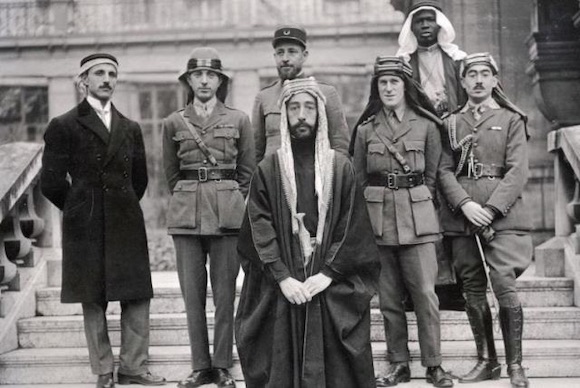
Arab Nationalism and Independence Movements: World War I ignited a wave of Arab nationalism in the Middle East. Arab leaders and intellectuals, inspired by the prospect of self-determination, advocated for independence from foreign rule. This period saw the emergence of prominent figures like T.E. Lawrence (Lawrence of Arabia) and the Arab Revolt against Ottoman rule, which had a profound impact on the formation of modern Arab states.
-
Balfour Declaration and the Palestine Question: During World War I, the British government issued the Balfour Declaration in 1917, expressing support for the establishment of a Jewish homeland in Palestine. This declaration had long-lasting consequences and contributed to the ongoing Israeli-Palestinian conflict, as it sparked conflicting national aspirations and heightened tensions between Jewish and Arab communities in the region.
-
Legacy of Borders and Regional Conflicts: The redrawing of borders and the imposition of artificial boundaries during and after World War I continue to shape the Middle East's political landscape. The arbitrary nature of these borders, often based on colonial interests rather than historical, cultural, or ethnic considerations, has been a source of ongoing conflicts and disputes in the region.
-
Sectarian and Ethnic Tensions: World War I deepened existing sectarian and ethnic tensions in the Middle East. The fragmentation of the Ottoman Empire led to the emergence of new states with diverse religious and ethnic compositions, fostering tensions and rivalries. These divisions have played a role in various conflicts, including the Sunni-Shia divide and ongoing struggles for ethnic and religious self-determination.