Effects of World War I on... |
| Europe |
| Great Britain |
| France |
| Russia |
| Germany |
| The United States |
| The Balkans |
| Middle East |
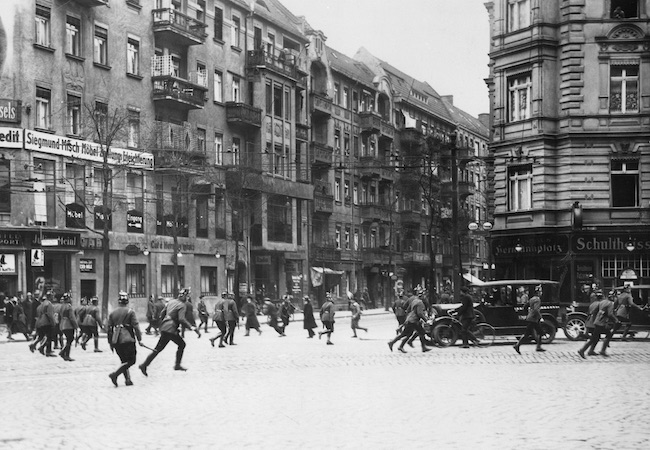
World War I had a profound and lasting impact on Germany, leaving the nation forever changed. As one of the Central Powers, Germany experienced significant political, social, economic, and psychological consequences as a result of the war.
-
Political Upheaval: The end of World War I brought about a seismic shift in Germany's political landscape. The German monarchy, led by Kaiser Wilhelm II, was overthrown, and the Weimar Republic was established. The nation transitioned from an autocratic system to a fledgling democracy. This political transformation was met with challenges and instability, as Germany faced internal conflicts, power struggles, and political extremism.
-
Economic Turmoil: Germany's economy suffered immensely as a result of the war. The massive financial burden of reparations imposed by the Treaty of Versailles strained the nation's resources. The loss of territories and resources, as well as the disruption of trade, further exacerbated the economic crisis. Hyperinflation, rising unemployment, and food shortages plagued Germany in the immediate post-war years, leading to social unrest and political instability.
-
Social Unrest and Disillusionment: The war deeply affected German society, leaving a sense of disillusionment and bitterness among the population. The unprecedented scale of casualties and the physical and psychological toll on soldiers and civilians generated widespread trauma and grief. The harsh conditions on the home front, the collapse of traditional values, and the disillusionment with the government contributed to a sense of unrest and a desire for change.
-
Rise of Extremism: The economic and social turmoil created fertile ground for extremist ideologies to take hold. The Treaty of Versailles and its perceived injustices fueled nationalist sentiment and resentment. The political vacuum and societal unrest provided a breeding ground for extremist movements, such as the rise of the National Socialist German Workers' Party (Nazi Party) led by Adolf Hitler. The seeds of totalitarianism and radical ideologies were sown, leading to the eventual collapse of the Weimar Republic and the ascent of the Nazi regime.
-
Cultural and Intellectual Expression: Despite the tumultuous aftermath of World War I, Germany experienced a period of cultural and intellectual innovation known as the "Weimar Renaissance." Berlin became a center for artistic experimentation, with significant contributions in literature, theater, cinema, and visual arts. The Weimar era saw the emergence of renowned figures such as Bertolt Brecht, Thomas Mann, and Marlene Dietrich, who pushed boundaries and challenged societal norms.