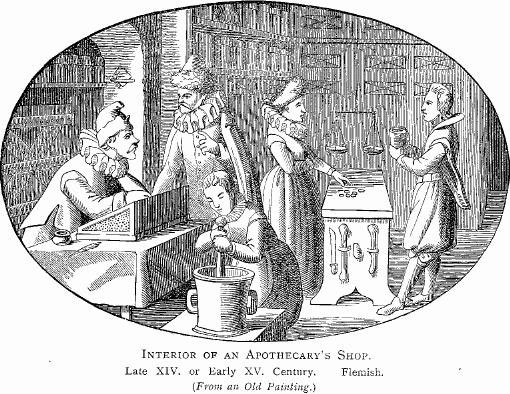
Apothecary
Colonial apothecaries prepared medicines, treated patients, made house calls, and trained apprentices. In many communities, they performed some of the work we now associate with doctors and pharmacists.
Medicine in Colonial America
Colonial apothecaries treated patients, prepared and prescribed medicines, made house calls, and taught apprentices. Some also performed surgeries, often without anything resembling modern anesthesia. Apothecaries used a wide variety of remedies and treatments. For example, calamine could be used to soothe itchy skin, while chalk was sometimes used to treat heartburn. Apothecaries also used leeches for bloodletting and cinchona bark to treat certain fevers.
Many apothecaries created their own remedies using herbs, minerals, animal products, and other substances. In addition to medicines, an apothecary shop might sell everyday goods such as toothbrushes, tobacco, and preserved foods.
Understanding Disease
Apothecaries and other medical practitioners in the eighteenth century generally focused on treating symptoms rather than understanding the underlying causes of disease. Illnesses such as smallpox and malaria were serious threats in colonial communities, while many modern diseases were less commonly recognized or understood in the same way they are today.
Training to Become an Apothecary
Most apothecaries learned their trade through an apprenticeship. Young apprentices studied how to prepare medicines, identify ingredients, treat patients, and manage an apothecary shop. Few received the kind of formal medical-school education that is expected of doctors today.
Why it mattered: Apothecaries provided much of the everyday medical care available in colonial communities and helped prepare the medicines people depended on when they became sick or injured.
Explore the Colonial Town
Click a shop or building on the map to learn about another colonial trade.
