Blacksmith
Blacksmiths were essential craftspeople in colonial towns. They heated and shaped iron to produce the tools, household goods, and farming equipment that colonists depended upon every day.
What Did Colonial Blacksmiths Make?
The blacksmith was an essential merchant and craftsman in a colonial town. He made indispensable items such as horseshoes, pots, pans, and nails. Blacksmiths (sometimes called farriers) made numerous goods for farmers, including axes, plowshares, cowbells, and hoes. They also made hammers, candleholders, tools, files, locks, fireplace racks, and anvils.
Working in the Forge
Most of the blacksmith's work was done in his personal forge, where extremely hot bars of iron were hammered with heavy sledges to shape the metal into useful objects. Blacksmiths needed strength, skill, and careful control of heat to produce durable goods.
Becoming a Blacksmith: Apprenticeships
The road to becoming a successful blacksmith was long and hard. Apprenticeships started at age 14 or 15 and could last up to seven years. At first, an apprentice would simply observe his master before helping with easy tasks. Eventually, the apprentice would learn more complicated tasks, like heating and bending iron.
From Apprentice to Journeyman
Finally, the apprentice would be tasked with fashioning some kind of metal masterpiece that would be judged by his master. If the piece was adequate, the apprentice would complete his apprenticeship and become a journeyman — a traveling blacksmith who could repair metal goods in nearby villages. If all went well, the journeyman could earn enough money through his work to open his own shop.
Explore the Colonial Town
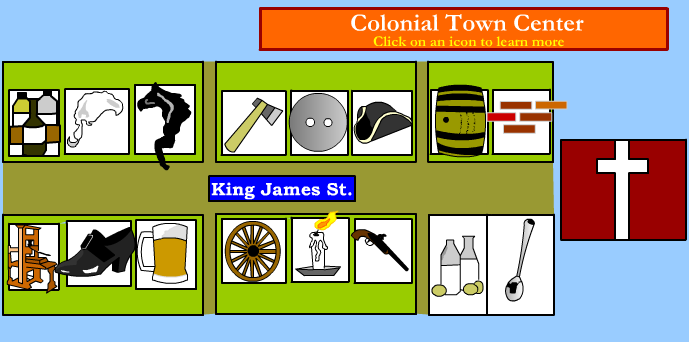
Click a shop or building on the map to learn about another colonial trade.