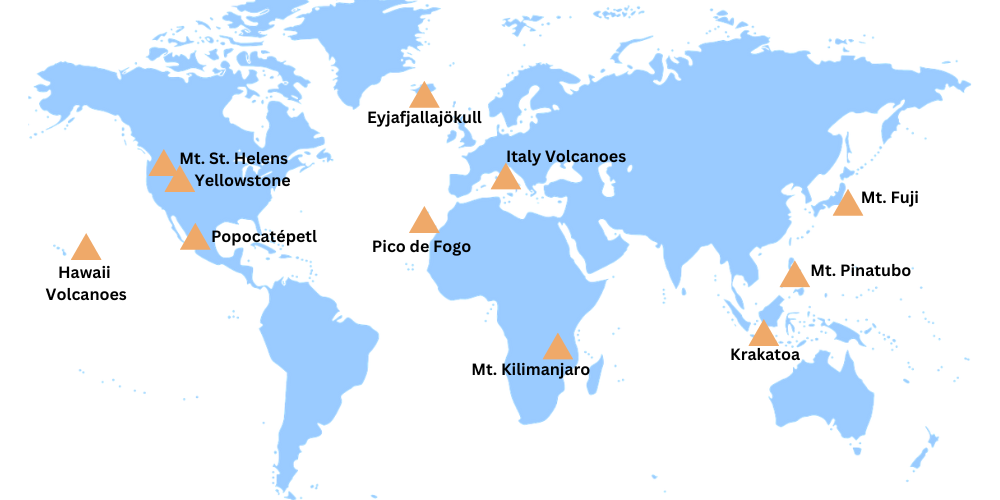
Mt. St. Helens
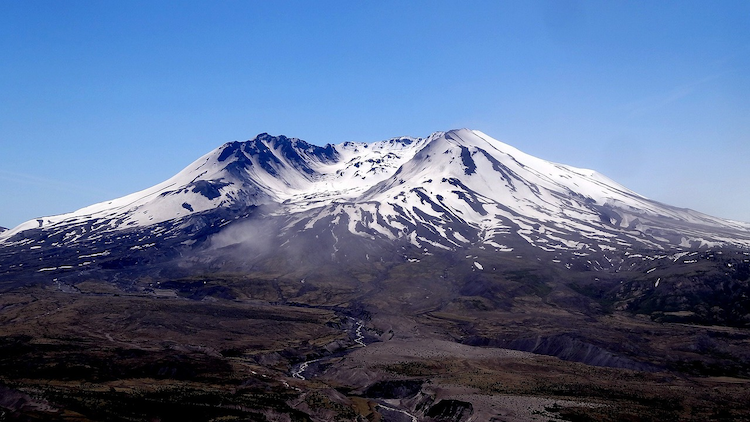
Image Credit - National Park Service - Public Domain
Mt. St. Helens, in the Cascades range of Washington state, erupted on May 18th, 1980. The massive level five eruption was preceded by numerous small earthquakes, steam explosions, and the bulging of the mountain itself. The eruption claimed the lives of 57 people and left behind catastrophic damage. Roads were shut down, forests were flattened, rivers and streams were choked with broken trees, and planes were grounded because of the ash and smoke that persisted for days. In all, the damage exceeded a billion dollars. The sheer power of the eruption was said to be equivalent to the detonation of 27,000 atomic bombs.
The eruption of Mt. St. Helens was the result of a landslide that was produced from a significant earthquake. When the earthquake shook the rocks on the surface of the earth loose, it formed a landslide that ripped open the unstable side of the volcano. This allowed for an immediate release of pressure and led to the devastating eruption. During this eruption hot gas, ash, and rock was ejected from the side of the volcano and destroyed everything in its path. This hot gas, ash, and rock, known as a pyroclastic flow, traveled at speeds of several hundreds of miles per hour. In addition, the heat released from the eruption caused the snow and ice on top of the volcano to melt. This melting produced a torrent of water which ripped down from the mountain, creating lahars, which are large volcanic mudslides. These mudslides, like the pyroclastic flows, destroyed everything they came into contact with. The epic eruption reduced the height of Mt. St. Helens 1,280 feet and produced a crater more than a mile wide.
Mt. St. Helens is still an active volcano with occasional small eruptions. Fortunately, scientists are working to monitor Mt. St. Helens and volcanoes like it in order to better predict when future eruptions will happen.
World Volcanoes