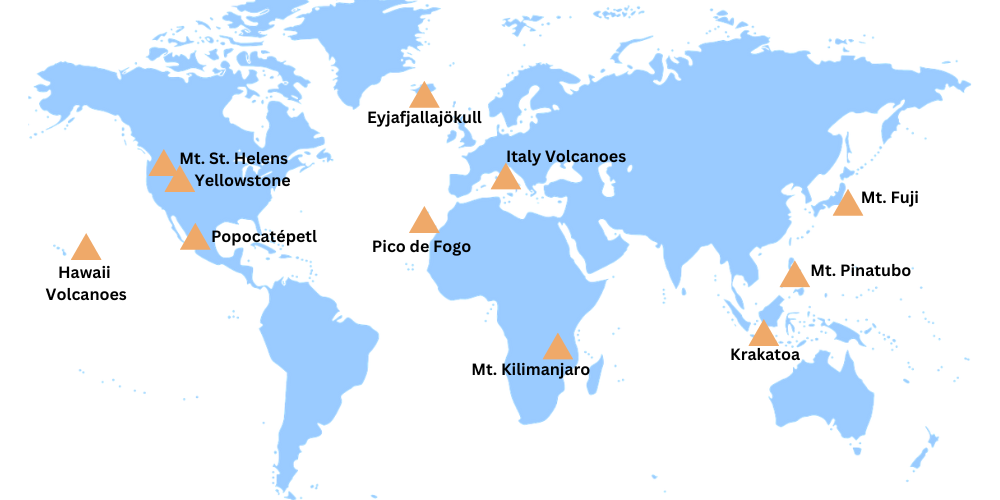
Italy Volcanoes
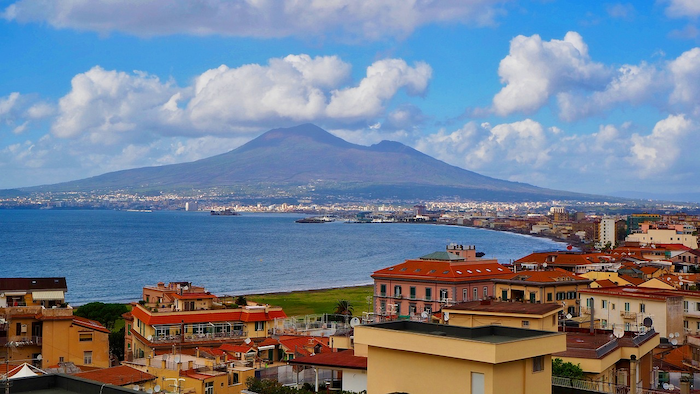
Mt. Vesuvius
Image Credit - https://pixabay.com/users/yorick77-2006390/
Mt. Vesuvius
Mount Vesuvius is an active volcano located just east of Naples, Italy. It is the only volcano on the continent of Europe to have erupted in the last one hundred years, though other volcanoes have erupted on islands in the Mediterranean Sea. In 1631, approximately three thousand people were killed by an eruption from Mount Vesuvius. Since 1631, the 4,200 foot high volcano has erupted at least twenty one times. Mount Vesuvius is considered particularly dangerous because today, nearly three million people live in the direct path of a potential future eruption.
Mount Vesuvius is most famous for its landmark eruption in the year 79 AD, which buried the cities of Pompeii and Herculaneum in layers of burning ash. The only account of the eruption that survives is from Pliny the Younger. From his dramatic account, scientists believe the cloud of ash he witnessed that descended upon Pompeii was twenty miles high. The city of Pompeii was completely buried. It was rediscovered in 1748, more than 1600 years after the eruption. The people of Pompeii were found buried under 12 layers of soil. Many of the buildings were amazingly well-preserved, as were the bodies of those who were just going about their daily routines when the eruption occurred. The ruins at Pompeii have provided archaeologists with valuable information about how people in the Roman Empire lived. Today, Pompeii is one of the most visited sites in Italy.
Mt. Etna
Perched on the eastern coast of the island of Sicily, Mount Etna is Europe's most active volcano. This towering giant, with its ever-changing landscapes and frequent eruptions, has fascinated scientists, artists, and adventurers for centuries.
Geological Features:
Mount Etna, known as "Mongibello" in Italian, is a stratovolcano characterized by its conical shape and towering prominence. Standing at an elevation of approximately 3,329 meters (10,922 feet), Etna is not only the highest volcano in Europe but also one of the most active in the world. Its distinctive profile, often capped with a veil of smoke and volcanic activity, is an iconic image that defines the Sicilian landscape.
The volcano's geological structure is shaped by the accumulation of lava flows, pyroclastic deposits, and volcanic rocks over millennia. Etna's slopes are adorned with craters, fissures, and calderas.
Historical Significance:
Mount Etna's history is deeply intertwined with the rich tapestry of Sicilian culture and mythology. In Greek mythology, the Cyclops – one-eyed giants – were said to inhabit the slopes of Etna. The mountain also finds mention in various ancient texts, serving as a backdrop to historical events and shaping the narratives of Sicily's diverse civilizations.
Throughout the centuries, Etna's eruptions have influenced local communities, impacting agriculture, settlements, and trade routes. Despite the occasional destruction caused by volcanic activity, the fertile volcanic soil surrounding Etna has also been a source of agricultural abundance, supporting vineyards, orchards, and lush vegetation.
Ongoing Activity:
One of the defining features of Mount Etna is its near-constant state of activity. Etna's eruptions are often characterized by the effusion of lava flows, ash emissions, and occasional explosive events. The volcano's dynamic nature has made it a crucial area for scientific research and monitoring.
Etna's activity is closely observed by a network of seismometers, gas analyzers, and satellite imaging. The continuous monitoring provides valuable data for understanding the volcano's behavior, anticipating eruptions, and ensuring the safety of nearby communities.
Tourism and Adventure:
Mount Etna has become a popular destination for tourists and adventurers seeking to witness the awe-inspiring spectacle of an active volcano. Guided tours offer visitors the opportunity to explore the lower slopes, craters, and lava fields, providing a firsthand encounter with Etna's geological wonders. Cable cars and off-road vehicles make the ascent to higher elevations accessible, offering panoramic views of Sicily and the surrounding Mediterranean.
The UNESCO World Heritage Site designation in 2013 recognized Mount Etna's cultural, historical, and geological significance, further emphasizing its importance on the world stage.
World Volcanoes