Purple Martins and the Behavioral Tradition Shift |
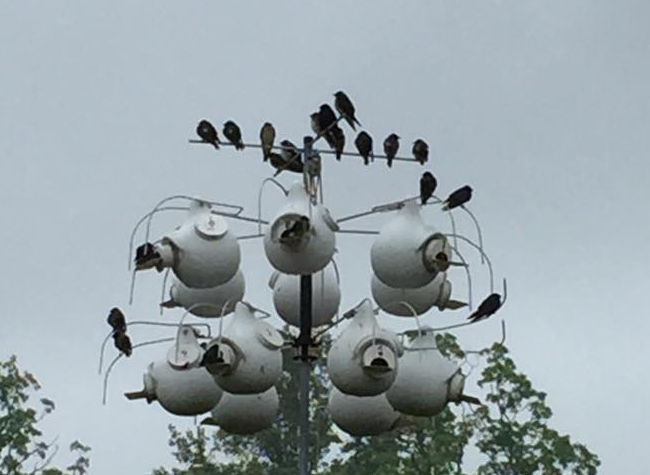
Photo: John Russo |
The first purple martin hosts were Native Americans. Hundreds or thousands of years ago, likely by chance, a single pair of martins probably nested in a Native American hanging gourd. A gourd is a simply a hollowed out container that hangs from a pole or fixture. The gourd served the same purpose for martins as woodpecker holes. Other martins likely followed suit and an incredible tradition was born.
The Native Americans quickly learned that hosting purple martins was to their advantage. The birds consumed copious amounts of insect pests. Furthermore, they noticed the martins were aggressive toward other birds on their nesting grounds and worked vigorously to drive away blackbirds and crows, which threatened crops, and hawks and vultures, which could steal food or eat chickens. They encouraged these birds to nest nearby by hanging gourds on wooden poles. The more they hung, the more martins they attracted. The practice of using gourds to attract martins is documented in the histories of the Cherokee, Creek, Choctaw, Chickasaw, and other Native groups in the American South.
As the nation was settled, Europeans copied the Native American practice of hanging gourds. Some of these settlers added artistic flair to the gourds and at some point, began building and painting houses for the birds. As more and more settlers poured west and south, land was cleared to make room for their settlements. Before long, the great swaths of forests that covered the land were gone and the natural cavities martins traditionally nested in became scarce, unintentionally and irreversibly making martins dependent on man-made gourds and nesting houses. The transition forced upon the martins is an example of a "behavioral tradition shift." Interestingly, this shift did not occur in western populations of martins, which still use woodpecker holes in trees and cacti to nest in rather than houses or gourds.
Today, eastern populations of martins are entirely dependent on a dedicated group comprised of thousands of "landlords." across the eastern and central United States. Many landlords are intimately involved with their martin colonies and take great measures to ensure their success. Removing predators, trapping invasive sparrows and starlings, caring for displaced or orphaned young martins, cleaning houses, and providing martins with mealworms or crushed egg shells are just some of the jobs performed on a daily basis by purple martin lovers.
|