American State Birds - Click on a bird to learn more
Nene
State bird of: Hawaii
Description
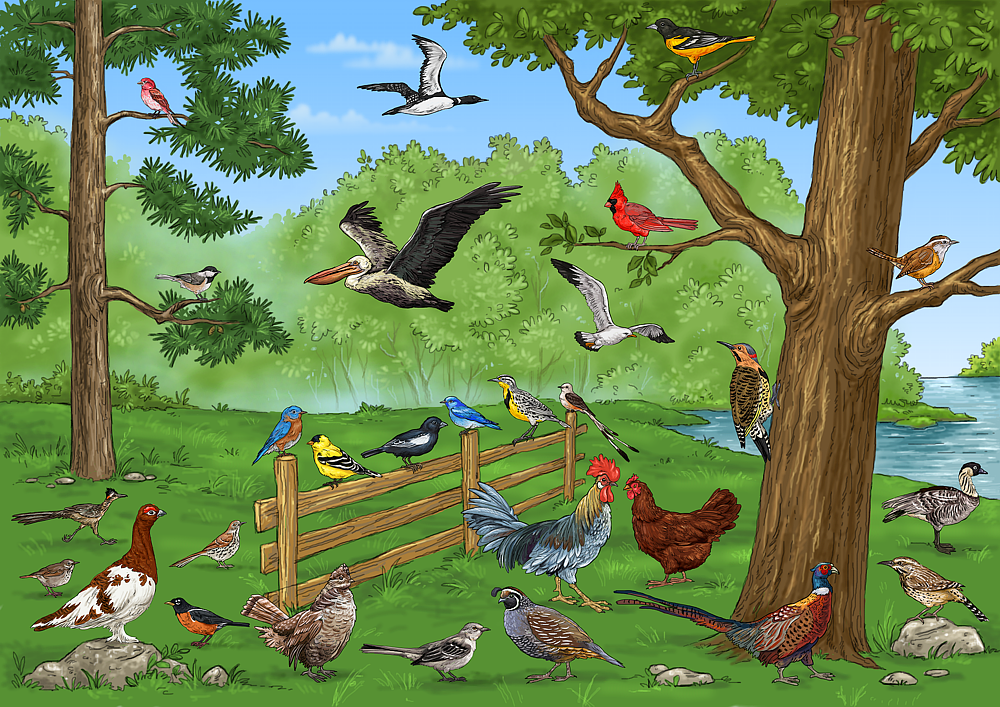
The Nene, sometimes referred to as the Hawaiian Goose, is actually a close relative of the more familiar Canada Goose. Measuring a little more than two feet in length, the handsome Nene is mostly brown, with a buff-colored neck, black face, and black head. The neck has conspicuous black streaks, which are actually the dark skin showing through the diagonal orientation of the bird’s neck feathers . It also appears to have a black ring that forms that border between its neck and breast. Females and males are identical. Interestingly enough, unlike other members of the goose family, the feet of the Nene are not completely webbed.
The female Nene incubates her eggs for 30 days. Fledglings leave the protection of their parents in about 12 weeks. The Nene has an extremely long breeding season, which lasts from November until June. Young birds are often the victim of feral dogs and cats.