American State Birds - Click on a bird to learn more
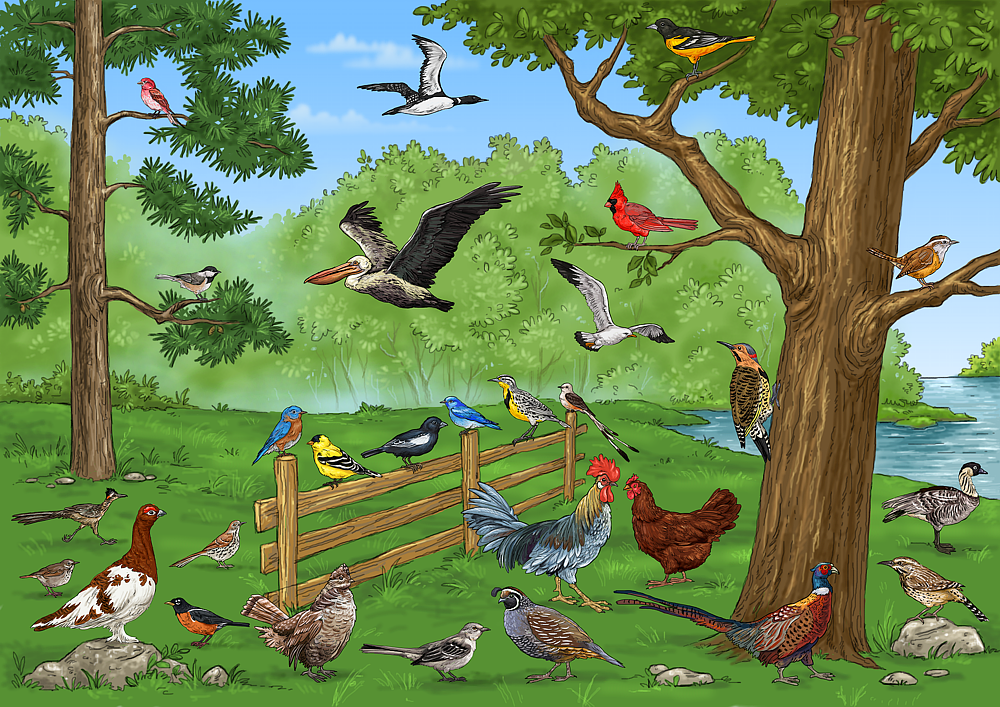
California Gull
State bird of: Utah
Description
Why, you may ask, is a bird named the California gull the state bird of Utah? The California gull is the bird that saved Utah’s crops from grasshopper plagues in the late 1800’s. In fact, a memorial to the bird now stands in downtown Salt Lake City.
The California gull measures about 20 inches in length. It is white with gray wings and black primary feathers along the edge of the wing. It legs are yellowish. The California gull has a large yellow bill with a black ring toward the tip, and a salmon-colored spot on the lower mandible. Females and males are similar. It takes three years for juvenile birds to acquire adult plumage. Depending on the age of the juvenile bird, it may be completely brownish, grayish, dusky, or whitish.
Diet
Range and Habitat
The California gull breeds chiefly in the Canadian provinces of Alberta, Manitoba and Saskatchewan, as well as North Dakota, Montana, eastern Idaho, Oregon, Washington, Utah, Colorado and the Lake Tahoe region of California and Nevada. Huge nesting colonies occur in Utah’s Great Salt Lake. California gulls, however, are easily found during migration throughout the western United States and Canada, south to Northern Mexico.
The California gull breeds on islands in lakes and rivers. During migration, it can be found in parking lots, beaches, landfills, and over the ocean. The California gull is a colonial nester. The female lays 2 to 4 eggs in a simple depression in dirt, sand, or on the ground.
Status
The California Gull is common.