American State Birds - Click on a bird to learn more
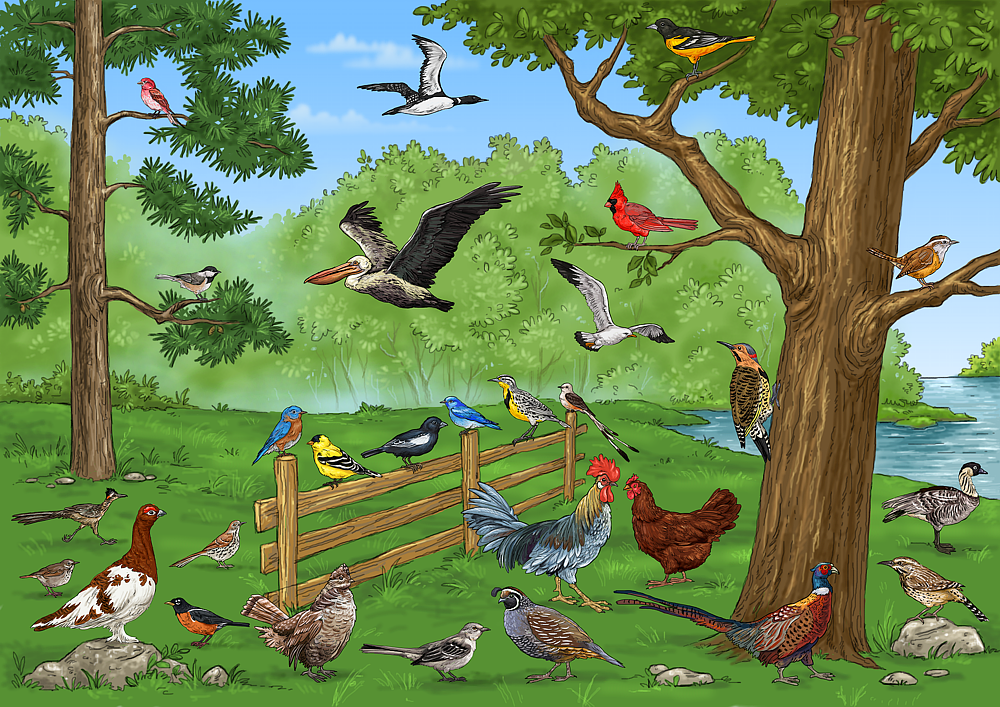
Brown Pelican
State bird of: Louisiana
Description
The Brown Pelican is the only of the seven species of pelicans in the world that is dark in coloration. The adult male pelican is mostly shiny brown with a dark red neck, white face and head. It has a conspicuous white eye, a short tail and webbed feet. The pelican has a huge bill and an extensible pouch. The pouch of eastern birds is greenish in color, while those of western birds are reddish. Females are identical to males but are slightly smaller. Immature pelicans have a white neck rather than a dark red one. Brown Pelicans can reach lengths of three and a half feet. Wing spans can be nearly eight feet long.
Pelicans build large, bulky nests in small trees, shrubs, or, on the ground. Brown Pelicans often nest in colonies of other pelicans, cormorants, and herons. Females lay 1-3 whitish-colored eggs after an incubation period of one month. The eggs are incubated under the webbed feet of the adult birds. Young pelicans will leave the nest in two to three months. Pelicans regurgitate food to feed to their young.