Introduction
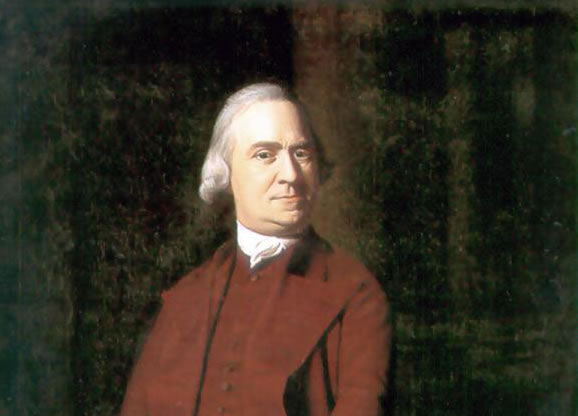
Samuel Adams was an American revolutionary and organizer of the infamous Boston Tea Party. He also signed the Declaration of Independence. Adams was born in 1722 to a wealthy family. He graduated from Harvard University in 1740 and received a master’s degree in 1743. After the death of his father in 1748, Samuel took over the family’s brewery business.
Sons of Liberty and Patriot Causes
After the brewery failed in 1764, Adams devoted himself to political causes. He was voted to the Massachusetts colonial legislature and vociferously opposed the Stamp Act of 1765 and the Townshend Acts in 1767 and even helped stage riots. In 1773, Adams organized the Boston Tea Party in response to the Tea Tax imposed by the British Crown. As British tea ships waited for payments in Boston Harbor, Adams and a band of men dressed up as Indians, boarded the ships, and dumped the tea into the harbor to the delight of spectators. In 1774, Adams became the Massachusetts representative in theContinental Congress and signed the Declaration of Independence in 1776. Adams was instrumental in developing the 1777 Articles of Confederation and was elected to the state senate of Massachusetts in 1781. He served for seven years before becoming its president in 1788. He was elected governor of Massachusetts in 1793 and served for four years.
Discussion Questions
- How did the failure of Adams’s brewery change the direction of his life?
- Why did the Stamp Act, Townshend Acts, and Tea Tax become important targets of Adams’s political activity?
- How did Adams move from organizing resistance in Massachusetts to participating in national government?
- What does Adams’s later service in the Massachusetts senate and as governor show about his political career after independence?