Reading level: Standard • Click highlighted vocabulary for a definition.
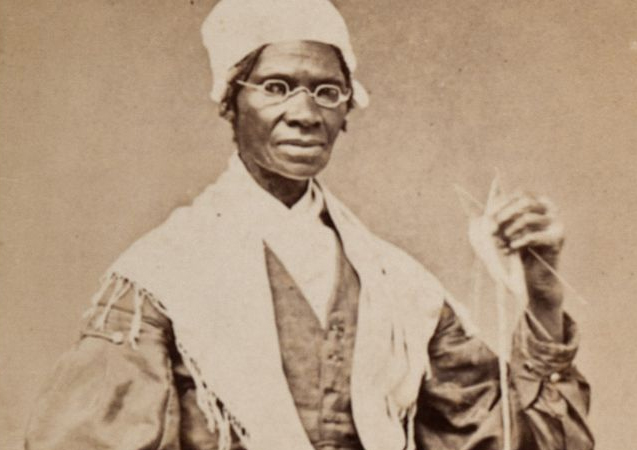
Sojourner Truth
Sojourner Truth was born into slavery in 1797 in Ulster County, New York. Her given name was Isabella Baumfree, but she changed her name in 1843 when she claimed God had commanded her to spread her hope across the countryside.
From Slavery to Freedom
In her early years, she was repeatedly sold from one family to another. In 1810, she was sold to the Dumont family where she experienced extreme cruelty. In 1826, one year before the state of New York abolished slavery, Isabella and her infant daughter left the Dumont estate and were taken in by Isaac and Maria Van Wagenen. It was here, where Sojourner experienced a religious awakening and became a devout Christian. On June 1, 1843, she became a Methodist and changed her name to Sojourner Truth. She eventually made her way to Massachusetts where she met influential suffragists and abolitionists such as William Lloyd Garrison and Frederick Douglass. Garrison was moved by her story and published The Narrative of Sojourner Truth: A Northern Slave. That same year, Truth spoke eloquently at the first National Women's Rights Conference in Worcester, Massachusetts, and at the Ohio Women's Rights Convention in 1851. Here, she delivered her most famous speech, now called "Ain't I a Woman" because her presence was so commanding that many of the audience members thought she must be a man. In this speech, she demanded equal rights for both women and blacks although her exact words are the subject of much debate.
Speaker, Activist, and Legacy
As time progressed, Truth gained a reputation as a powerful speaker. She spoke in front of hundreds of audiences concerning slavery and suffrage. During the American Civil War, Truth helped to recruit black soldiers for the Union Army. She eventually moved to Michigan where she fought for the rights of former slaves. Truth died in Battle Creek, Michigan, on November 26, 1883. In 1999, a 12-foot statue of her was unveiled in Battle Creek's Monument Park. It was recently announced that Sojourner Truth along with other prominent suffragists will appear on the back of the United States $10 bill in 2020 - the 100th anniversary of the 19th Amendment, which gave women the right to vote in America.
Discussion Questions
How did Truth’s experiences under slavery influence the causes she later spoke about?
Why was changing her name from Isabella Baumfree to Sojourner Truth significant?
Why do historians distinguish between the different published versions of Truth’s famous 1851 speech?
How did Truth continue her activism during and after the Civil War?
🔎 Sojourner Truth Scavenger Hunt
Sojourner Truth
Sojourner Truth was born into slavery in 1797 in Ulster County, New York. Her given name was Isabella Baumfree, but she changed her name in 1843 when she claimed God had commanded her to spread her hope across the countryside.
From Slavery to Freedom
In her early years, she was repeatedly sold from one family to another. In 1810, she was sold to the Dumont family where she experienced extreme cruelty. In 1826, one year before the state of New York abolished slavery, Isabella and her infant daughter left the Dumont estate and were taken in by Isaac and Maria Van Wagenen. It was here, where Sojourner experienced a religious awakening and became a devout Christian. On June 1, 1843, she became a Methodist and changed her name to Sojourner Truth. She eventually made her way to Massachusetts where she met influential suffragists and abolitionists such as William Lloyd Garrison and Frederick Douglass. Garrison was moved by her story and published The Narrative of Sojourner Truth: A Northern Slave. That same year, Truth spoke eloquently at the first National Women's Rights Conference in Worcester, Massachusetts, and at the Ohio Women's Rights Convention in 1851. Here, she delivered her most famous speech, now called "Ain't I a Woman" because her presence was so commanding that many of the audience members thought she must be a man. In this speech, she demanded equal rights for both women and blacks although her exact words are the subject of much debate.
Speaker, Activist, and Legacy
As time progressed, Truth gained a reputation as a powerful speaker. She spoke in front of hundreds of audiences concerning slavery and suffrage. During the American Civil War, Truth helped to recruit black soldiers for the Union Army. She eventually moved to Michigan where she fought for the rights of former slaves. Truth died in Battle Creek, Michigan, on November 26, 1883. In 1999, a 12-foot statue of her was unveiled in Battle Creek's Monument Park. It was recently announced that Sojourner Truth along with other prominent suffragists will appear on the back of the United States $10 bill in 2020 - the 100th anniversary of the 19th Amendment, which gave women the right to vote in America.
Born Into Slavery
Sojourner Truth was born Isabella Baumfree in Ulster County, New York, around 1797. She was enslaved as a child and was sold several times. In 1826, she escaped slavery with her infant daughter, Sophia. New York completed gradual emancipation in 1827.
A New Name and Mission
Isabella became deeply religious. In 1843, she adopted the name Sojourner Truth and began traveling and speaking publicly. She became known for speaking against slavery and for women’s rights.
A Famous Speech
Truth spoke at a women’s rights convention in Akron, Ohio, in 1851. A version published soon after the convention differs substantially from the famous version published twelve years later that included the repeated phrase “Ar’n’t I a Woman?” Historians therefore treat the exact wording of the speech cautiously.
Civil War and Later Life
During the Civil War, Truth supported the Union cause and helped recruit Black soldiers. She later met President Abraham Lincoln and continued advocating for formerly enslaved people and women. She died in Battle Creek, Michigan, in 1883.
Her Legacy
Sojourner Truth is remembered as an important abolitionist and women’s rights advocate. Plans announced in 2016 to redesign the back of the $10 note with images connected to the women’s suffrage movement, including Truth, were not implemented on the originally announced 2020 schedule.