Early Life
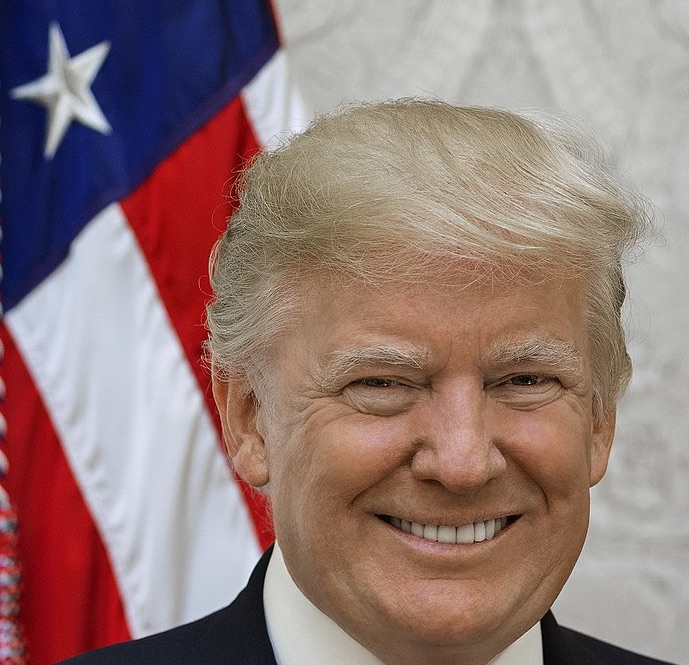
Donald J. Trump was born in New York on June 14, 1946. His father was a well-known real estate developer, and his mother managed the household. Donald Trump was one of five children. For his education, Trump attended the New York Military Academy and the Wharton School at the University of Pennsylvania. After graduation, he joined his father’s real estate business and later became its president. The business eventually became known as the Trump Organization.
Trump Organization Projects
The Trump Organization developed and managed projects that included hotels and resorts, golf courses, casinos, and residential and commercial buildings. The company also licensed the Trump name for projects and products in the United States and other countries.
Trump in the Media
Trump co-authored books about business and became widely known through television, especially as the host of the reality program The Apprentice. His media career increased his national public profile before he entered electoral politics.
Election of 2016
In 2016, Donald Trump defeated a large field of candidates to win the Republican nomination for president. In the general election, he defeated Democratic nominee and former Secretary of State Hillary Clinton in the Electoral College. His campaign used the slogan “Make America Great Again.” Trump became the 45th president of the United States and took office on January 20, 2017.
First Presidency: 2017–2021
During Trump’s first term, his administration pursued tax reductions, deregulation, stricter immigration policies, changes to trade policy, and the appointment of federal judges. The Tax Cuts and Jobs Act of 2017 lowered the corporate tax rate and changed individual taxes. Supporters argued that the administration’s economic policies encouraged investment and growth, while critics raised concerns about distributional effects and federal deficits.
Foreign Policy
Trump pursued an “America First” approach to foreign policy and trade. The United States withdrew from the Trans-Pacific Partnership, replaced NAFTA with the United States-Mexico-Canada Agreement, and imposed tariffs on a range of imported goods, including products from China. His administration helped broker the Abraham Accords, which established or normalized relations between Israel and several Arab states. The administration also withdrew the United States from the Iran nuclear agreement and announced withdrawal from the Paris climate agreement. Supporters and critics differed over the effects of these decisions on U.S. interests, alliances, trade, and international cooperation.
Domestic Policy
Domestically, the Trump administration sought to repeal or change parts of the Affordable Care Act and adopted immigration measures that included restrictions on entry from several countries, increased immigration enforcement, and a “zero tolerance” policy at the southern border. The administration also appointed three Supreme Court justices and many other federal judges. These policies generated substantial political and legal debate.
Impeachments
The House of Representatives impeached Trump in December 2019 on charges of abuse of power and obstruction of Congress related to his dealings with Ukraine. The Senate acquitted him in February 2020. The House impeached him a second time in January 2021 on a charge of incitement of insurrection following the January 6 attack on the U.S. Capitol. The Senate again acquitted him after he had left office.
COVID-19 Pandemic
The COVID-19 pandemic became the dominant national crisis during the final year of Trump’s first term. His administration launched Operation Warp Speed to accelerate the development, manufacturing, and distribution of vaccines. The federal response also included travel restrictions, economic relief measures, testing efforts, and public-health guidance. The administration’s handling of the pandemic was the subject of extensive political and public-health debate.
2020 Election and Post-Presidency
In the 2020 presidential election, Democrat Joe Biden defeated Trump, winning 306 electoral votes to Trump’s 232. Trump and his allies challenged the results through numerous lawsuits and public claims of election fraud. Courts rejected or dismissed many of the challenges, and Congress certified Biden’s victory after the January 6, 2021, attack on the U.S. Capitol. After leaving office, Trump remained a major figure in the Republican Party and continued holding rallies and endorsing candidates.
Legal Cases and the 2024 Campaign
After leaving office, Trump faced several criminal and civil cases. In May 2024, a New York jury found him guilty on 34 counts of falsifying business records in the first degree. Trump denied wrongdoing and pursued legal challenges. At the same time, he campaigned for president again and won the Republican nomination.
Election of 2024 and Return to the White House
In the 2024 presidential election, Trump defeated Democratic nominee Kamala Harris. The Electoral College vote was 312 for Trump and 226 for Harris. Trump was sworn in on January 20, 2025, becoming the 47th president of the United States as well as the 45th. JD Vance became vice president.
Second Presidency
During his second administration, Trump has again emphasized immigration enforcement, border security, tariffs and trade policy, deregulation, and changes to federal programs and executive-branch policy. His administration declared a national emergency at the southern border, issued new immigration and entry restrictions, rescinded numerous executive actions from the Biden administration, and again directed the United States to withdraw from the Paris climate agreement. The administration has also used tariffs extensively as part of its economic and trade strategy. These actions have produced continuing political, legal, economic, and diplomatic debate.
Discussion Questions
- How did Trump’s business and media career contribute to his public profile before 2016?
- What policy themes appeared in both Trump’s first and second administrations?
- How did the outcomes of the 2020 and 2024 elections differ?
- Why is it useful to distinguish documented government actions from arguments about their effects?