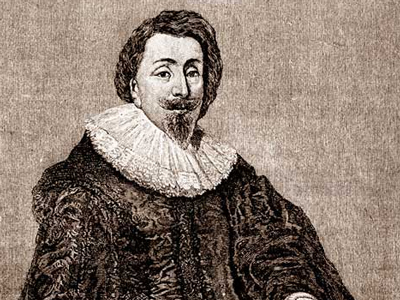
Avalon was Too Cold
Lord Baltimore, also known as George Calvert, 1st Baron of Baltimore, was interested in the English colonization of the New World to establish a refuge for England's Catholic population. Calvert was instrumental in the British settlement of Avalon, located off of the coast of Canada's Newfoundland. Calvert, however, became discouraged with the colony's cold climate and sought a more temperate place to start a colony farther south.
A Catholic Refuge
In 1692, Calvert arrived in Jamestown, Virginia. The residents of Jamestown, however, opposed Catholicism and ordered him to leave. Calvert returned to Virginia determined to earn a charter for his colony from the Crown. Short on money, and in declining health, his persistence finally paid off when he was awarded about 12 million acres of land north of the Potomac River. Calvert, however, died at the age of 52 just five weeks before his charter was approved. Calvert's son, Cecil, would become the next Lord Baltimore and would be in charge of the colony's affairs. On November 22, 1663, 200 Catholic colonists left England on the ships Ark and Dove and landed on March 24, 1664, on what was then called Blackstone Island (now St. Clement's Island).
Discussion Questions
- Why did the climate of Avalon influence Calvert’s plans for another colony?
- How did Calvert’s Catholic faith affect his experience in Virginia?
- Why did Cecil Calvert become important to the Maryland project after his father’s death?
- How does the voyage of the Ark and Dove show that George Calvert’s colonial plans continued after his death?