Part I — Childhood and Early Years
Early Life
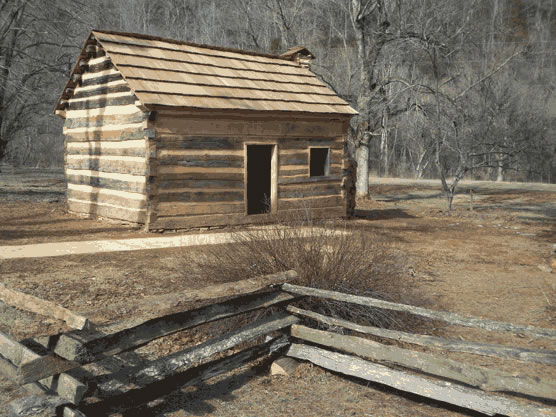
Abraham Lincoln was born on February 12, 1809, in Hardin County, Kentucky, to Thomas and Nancy Lincoln in their one room log cabin on their farm known as Sinking Spring (near modern-day Hodgenville, Kentucky). Although Thomas lacked formal education, he was an excellent farmer and carpenter, and often times served as a member of the jury. Thomas and Nancy joined a small Baptist church in the area that had broken away from the larger church over the issue of slavery.
Knob Creek, Indiana, and a New Mother
When Abe was two, the family moved to nearby Knob Creek Farm, where Abe's first memories of his childhood were formed. Because of difficulties his father had with the title to the farm, Thomas Lincoln moved his family to Pigeon Creek, Indiana in 1816 where the seven year-old Abraham helped him build a log cabin in the woods. Two years later, Nancy died of "milk sickness." Milk sickness is a rare disease caused by drinking the milk or consuming the meat of a cow that had fed on poisonous roots. In 1819, however, Thomas married Sarah Bush Johnston, whom Abraham would call "mother." Sarah was a kind and warm woman who brought her three children, Matilda, Elizabeth, and John to the Lincoln homestead to live with Abraham and his sister.
Education and Reading
From an early age, Sarah recognized Abraham's quick wit and intellect and encouraged him to read. Abraham became an avid reader, gobbling up any book he could get his hands on from neighbors, clergymen, and traveling teachers. Abraham attended school on an inconsistent basis. At times, traveling teachers may have taught at a nearby rudimentary schoolhouse, and at other times Abraham walked several miles to the nearest school. Lincoln himself admitted that the total amount of schooling he received in his childhood was no more than twelve months; nevertheless, he became an excellent reader, learned to write, measure, and make division and multiplication calculations. Abraham took his studies very seriously. Without paper in the house to practice his writing and math, he often did arithmetic on the back of a wooden spoon using charcoal as a makeshift pencil. Lincoln described where he grew up and the opportunities for education in the following quote:
"It was," he once wrote, "a wild region, with many bears and other wild animals still in the woods. There I grew up. There were some schools, so-called, but no qualification was ever required of a teacher beyond "readin', writin', and cipherin'" to the Rule of Three. If a straggler supposed to understand Latin happened to sojourn in the neighborhood, he was looked upon as a wizard."
Work, Strength, and Character
Abe's growing desire to attend school conflicted with his father's demands on him, which often made him appear lazy to his neighbors. His father often rented him out to perform manual labor tasks such as shucking corn, hoeing, gathering, and plowing. During the early 1800's, Abe's father was entitled to all of the money earned as a result of his son's labor. Abe's considerable strength was evident with his unusual skill and power with an axe. Abe was said to be able to chop more wood and split more rails than anyone around. Far larger and stronger than the other boys in the region, Abe could outrun and outwrestle all of them. Unlike most boys of his time, however, Abe avoided hunting because he took no pleasure in killing animals.
Flatboat Journeys and Slavery
Although Abe gained a reputation as a prankster, and for his storytelling abilities, he also gained a reputation for honesty. When he was nineteen years old, he was hired to co-steer a flatboat down the Mississippi River to unload produce to be sold at the plantations in the South and to return with the money earned. For these services, Abe was paid eight dollars a month. More importantly, these forays into the South opened Abe's eyes to the world beyond the Indiana frontier and likely begun to shape his views toward the horrors of slavery as he witnessed the auctions and treatment of slaves firsthand.
Part II — Illinois, Law, and Politics
Illinois Years
In 1830, Abe’s father moved the family to Illinois following fears of another milk sickness outbreak. After enduring several plagues and one of the worst winters on record, Abe decided to leave his father’s homestead and set off on his own at the age of 22. Abe's experience, intelligence, and ingenuity would serve him well. His first job required him to steer a flatboat from Illinois to New Orleans, Louisiana. After leading the construction of the flatboat with two other boys, Abe gained notoriety from the residents of New Salem, when he figured out how to float the stuck flatboat over Rutledge's Dam, by drilling a hole in the bottom of the boat. After successfully unloading the goods in New Orleans, Abe took a steamer to St. Louis and walked home the remainder of the way. The owner of the flatboat was so impressed with Abe, he hired him to work as a clerk in his store in New Salem.
New Salem and First Campaign
In New Salem, Abe made many friends, mastered grammar, and gained a reputation as a master story-teller. In August of 1832, he decided to become a candidate for one of four representatives of Sangamon County in the Illinois Legislature, despite being a resident in the county for only nine months. His campaign platform centered on improvements to the navigation of the Sangamon River he would initiate. During this time, however, Lincoln was made captain of a company of men from New Salem to volunteer their service in the Black Hawk War. The company would become the Fourth Illinois Mounted Volunteers. Lincoln himself served for about three months in the frontier of Illinois, but was never engaged in any real combat. When he returned to New Salem, it was election time. By this time, however, there were thirteen candidates, and he finished eighth on the ballot (though over 90% of the residents of New Salem voted for him). Discouraged, Abe decided to enter a partnership to purchase the store he clerked at on credit. Thinking that New Salem was an up and coming town, Lincoln believed the purchase would earn him great profits. Unfortunately, his partner abandoned him, subsequent attempts to sell the store were unsuccessful, and Lincoln was saddled with a debt that would take him seventeen years to pay off.
Abe Enters Politics
On May 7, 1833, Abe was appointed postmaster of New Salem. As the population of New Salem declined over the next few years, it became too small for a post office and Abe was out of job. That same year, Lincoln was hired to survey new lands acquired by Sangamon County, despite the fact he had no training as a surveyor. According to legend, it took Abe only six weeks to learn the trade and from that point on was considered an excellent surveyor. In 1834, Abe would campaign again for representative in the Illinois state legislature. Now that he was well-known in a larger portion of Sangamon County, Abe traveled from village to village giving speeches, attending shooting matches, horse races and other community events. Again, there were thirteen candidates, but this time Abe won.

Lincoln's Childhood | Middle Years | Presidential Years
Illnois Legislature
Abe became an influential force of the Whig party in the Illinois legislature and was reelected in 1836, 1838, and 1840. During this time, the issue of slavery became more and more contentious in Illinois and many other states. In 1837, Lincoln first spoke publicly to the legislature concerning his views on slavery when it passed a set of resolutions against abolitionist (anti-slavery) groups. Although Illinois was a free state at the time, it had many people who supported slavery, especially in its southern portions. In addressing the legislature, Abe opposed the resolutions and asserted that he believed slavery was an evil institution. Despite his feelings against slavery, Lincoln admitted he did not think the time was right to free all of the slaves.
Abe Earns his Law License
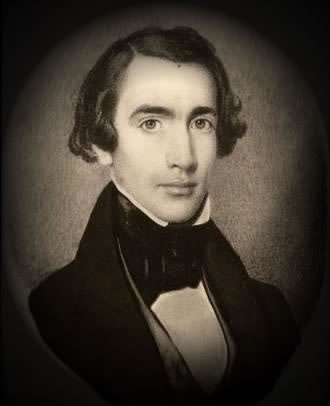
In 1836, Lincoln endeavored to study law. Not surprisingly, by the end of 1836, he was admitted to the Illinois state bar and obtained his license to practice. The next year, he moved to Springfield, where he was already popular with the city's residents for his efforts to get the state capital moved there from Vandalia. Despite the fact he had become a lawyer, Abe was still in debt, had no money, and had no place to live. Sometime shortly after arriving in Springfield, Abe took up residence in the upstairs room above a store owned by Joshua Speed. Abe could not afford to pay the price for his own room so Joshua offered to share his room. Abe, who was carrying all of his possessions in two saddlebags when he inquired about the price for a room, remarked “Well, Speed, I am moved!" after setting his saddlebags on the floor of the room. Abe and Joshua quickly became inseparable and forged a lifelong friendship.
Prairie Lawyer
Abe soon became a respected lawyer, known for his honesty, wit, oratory and hard work. In the 1830's, lawyers and lawmakers were expected to travel to circuit courts throughout the state, often times covering great distances. Abe was assigned to what was called the eighth judicial circuit. As a politician and lawyer, Abe would travel to such courts to explain to the people the meanings of the laws created in the legislatures that were being applied to the local cases. Abe endeared himself to the people with the anecdotes and stories he used to explain the difficult concepts to people in terms they could understand. Often times, such educational "sessions" were held in the village tavern or meetinghouse, would include meals, and would last well into the night. It was at these "sessions" where Abe's legend was born and grew; where his stories, speeches, and explanations became legendary. Though poor, Abe was beginning to make a name for himself beyond the confines of New Salem or even Springfield.
Abe Marries
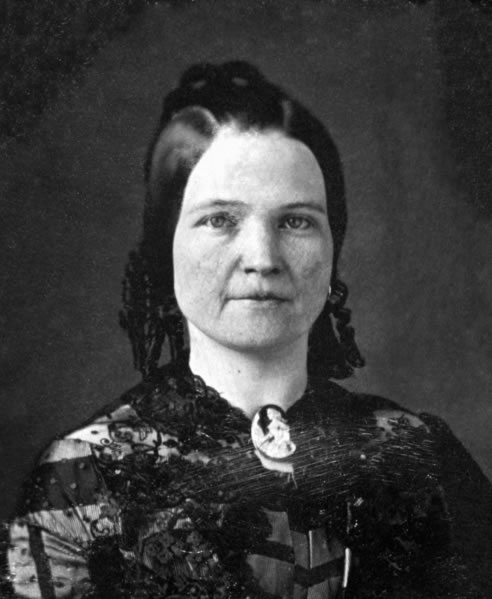
In December of 1839, Abe met Mary Todd, a "handsome" woman from a wealthy, slave owning family from Lexington, Kentucky. Abe had been involved in two romances prior to Mary; one with Ann Rutledge, who died of typhoid, and another with Mary Owens, which ended abruptly. By 1840, however, Abe and Mary Todd became engaged. Unfortunately, their mutual affections failed to last and by 1841, the engagement was broken, plunging Abe into a deep depression that rendered him unable to attend to his business or his job. Mired in sadness, Lincoln went back to his boyhood home in Kentucky with his friend Joshua Speed, where he apparently recovered sufficiently to return to his life in Springfield. To this day, there is no historical record of why the pair decided to call off their engagement. In 1842, however, Abe and Mary had re-established relations and were married on November 4th of that year. Abe and Mary would have four children, two of which died in childhood. In 1844, Abe and Mary Todd bought their first house on the corner of Eighth and Jackson Streets in Springfield.
Lincoln's Childhood | Middle Years | Presidential Years
Abe as Congressman
Following his marriage, Abe's interest in politics continued to influence the course he would take in life. Despite entering a law partnership with Judge Stephen Logan, Abe made several unsuccessful attempts to gain the Whig nomination for congressman in the 30th District of Illinois. In 1846, however, Abe was finally nominated and elected in August of that year. Abe served one two-year term in Washington and was the only Whig representative in the Democrat-dominated Illinois delegation. During his time as congressman, Abe spoke out against the Mexican-American War, attributing its cause to president James K. Polk’s desire for “ military glory—that attractive rainbow, that rises in showers of blood." Lincoln believed the United States was waging an unprovoked war for the purposes of expanding its boundaries. This stance made him particularly unpopular and Lincoln lost much of the political support he once enjoyed, and hence, was not re-elected to Congress.
Back to Law
After this stint as congressman, Lincoln returned to Springfield with a new vigor to practice law. He "rode the circuit" twice every year for ten weeks, practicing law in county seats throughout the state of Illinois. Many of his cases involved disputes which involved the operations of barges, drawbridges, and railroads. He would argue cases in front of the Illinois Supreme Court some 175 times, and even argued a case in front of the United States Supreme Court. Of the 51 cases in which he was the only lawyer for a particular client, 31 of the cases were decided in his favor. Abe, who called himself "the prairie lawyer", took other kinds of cases as well, including those involving murder. In 1858, he successfully defended "Duff" Armstrong against charges of homicide. One of the witnesses testified to seeing the murder committed in the moonlight. Abe proceeded to consult his copy of the Farmer's Almanac, which showed the moon at the time was at a low angle, reducing visibility and making it highly unlikely anyone could witness a crime using moonlight alone. Armstrong was acquitted. At this point, Abe was one of the foremost lawyers in the state of Illinois. Abe, however believed he lacked the logic, reasoning and mathematical skills needed to be an elite lawyer and dedicated himself to intensive late-night readings until he felt he had improved himself with respect to those subjects.
As the issue of slavery continued to strain relations between the North and the South, and with the passage of the Kansas-Nebraska Act in 1854, which opened up the new territories to the possibility of slavery, Abe returned to politics.
Abe Speaks out Against Slavery
On October 16, 1854, Abe issued his famous "Peoria Speech" in which he condemned the institution of slavery, declaring,
" I hate {slavery} because of the monstrous injustice of slavery itself. I hate it because it deprives our republican example of its just influence in the world...""
Formation of the Republican Party
Late that year, Abe decided to run for the Illinois Senate seat as a Whig. The Whigs, at the time, were crumbling from the inside out. Differing opinions within the party concerning the Kansas-Nebraska Act threatened to tear the party in two, or, to obliterate it all together. Consequently, Lincoln lost the nomination, but became instrumental in the formation of a new party - the Republican Party. The Republican Party quickly gained influence and became a national political powerhouse by the time Lincoln would be elected president.
In 1857, Chief Justice of the United States Supreme Court, Roger Taney, ruled that Blacks had no rights in America as citizens in the famous Dred Scott vs Sandford decision. The decision was a major blow to the abolitionist North and further polarized relations between the two parts of the country. Although Lincoln spoke out against the decision, he affirmed the Court's right to issue such as a decision. That same year, after his nomination by the Illinois Republican Party for the Senate, Abe delivered the immortal words,
"A house divided against itself cannot stand. I believe this government cannot endure permanently half slave and half free. I do not expect the Union to be dissolved—I do not expect the house to fall—but I do expect it will cease to be divided. It will become all one thing, or all the other"
Lincoln's Childhood | Middle Years | Presidential Years
Part III — Presidential Years and the Civil War
Abe Lincoln Emerges
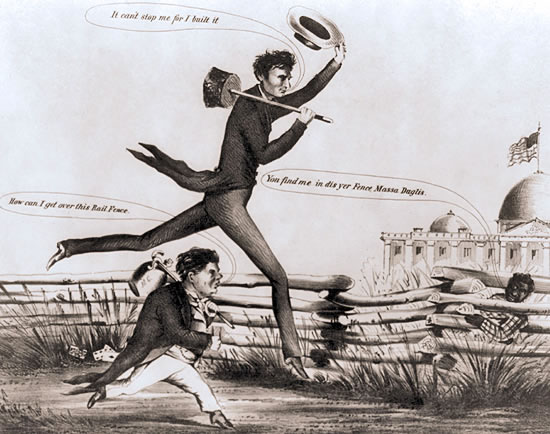
Though Abe had a national reputation, the Republican nomination for president in the Election of 1860 seemed elusive. Powerful Republicans William Seward from New York, Salmon P. Chase from Ohio and Edward Bates from Missouri seemed to be the frontrunners. On February 27, 1860, however, Abe was invited to speak before a crowd of powerful republicans at Cooper Union (a university) in New York City. Abe’s anti-slavery speech, in which he claimed the Founding Fathers and authors of the Declaration of independence would have prohibited the extension of slavery into new territories, left a lasting impression on the members of the audience and propelled him to legitimacy among the Republican candidates running for presidency. The powerful publisher Horace Greeley called it "one of the most happiest and most convincing political arguments ever made in this City ... No man ever made such an impression on his first appeal to a New-York audience" . After the speech, Abe decided that he would at least make an attempt for the Republican nomination to the presidency. He assembled a team of devoted campaigners who called Lincoln "The Rail Candidate".
The Republican National Convention
On May 9-10 Abe and his team traveled to the Republican National Convention in Decatur, Illinois, where his savvy team of supporters worked the convention for endorsements. Seward and Chase, though powerful and well-known politicians, had created enough enemies over the years to prove vulnerable and had alienated parts of the Republican Party. Though Abe believed slavery was evil, his moderate (rather than radical) stance appealed to many, as did his support for the nation's internal improvements and protective tariff. Furthermore, Abe was extremely popular in the western states, and because the convention was in his home state, thousands of his supporters descended upon Decatur. While Seward led on the first and second ballots (though he didn’t get enough votes to win), Lincoln won the nomination on the third ballot when the chairman of the Ohio Republican Delegation was convinced to shift his votes to Lincoln. Seward, who thought his nomination was assured was crushed, and Chase couldn’t even manage to draw full support from his home state of Ohio. Now that Abe had secured the Republican nomination for President, he had a chance to win the Presidential election.
Abe is elected the 16th President
In 1860, the future of the United States was much in doubt. The issue of slavery, which had bitterly divided the nation, had also begun to divide political parties, making the presidential election very complicated. The Democratic Party had been divided into the Northern Democratic Party and Southern Democratic Party. The Northern Democratic Party nominated Stephen Douglas for the presidency, while the Southern Democratic Party nominated John C. Breckenridge. The Constitutional Union Party nominated the former Tennessee Governor John Bell.
On November 6, 1860, Abraham Lincoln was elected president in 33 states. Of the eleven southern states that would eventually secede, only Virginia allowed Abe's named to be on their ballots. In Virginia, Abe receive slightly over one percent of the popular vote. In the four slave states that would become Border States, Abe finished third or fourth. In New England, however, Abe won the popular vote in every county. The 81.8 percent voter turnout for the Election of 1860 is the second highest turnout in presidential election history. Now that Abe had been elected President, he had to appoint the members of his cabinet.
Choosing Advisors
In thinking about his advisors, Abe wanted the brightest and most influential politicians available. For the two most important posts in his cabinet, he chose the two candidates that ran against him for the Republican nomination for president. He appointed William Seward as his Secretary of State and Salmon P. Chase as his Secretary of Treasury. Both men would prove indispensible to the President in his dealings with the Civil War.
Lincoln's Childhood | Middle Years | Presidential Years
Secession
Following Abe's election, the state of South Carolina seceded from the Union on December 20, 1860. Florida, Mississippi, Louisiana, Alabama, Texas, and Georgia would secede in the following weeks. These states formed the Confederate States of America (CSA) and declared themselves an independent nation. Upon entering office, Abe was faced with the most pressing crisis in the history of the young nation. Abe's road to the White House was not easy either. According to some accounts, he had to ride through Baltimore on a secret train in disguise to evade would-be assassins on his way to inauguration in Washington. After Abe’s inauguration, the Confederacy continued to mobilize. It elected Jefferson Davis as president and set up its capital headquarters in Montgomery, Alabama. War was imminent.
War Begins
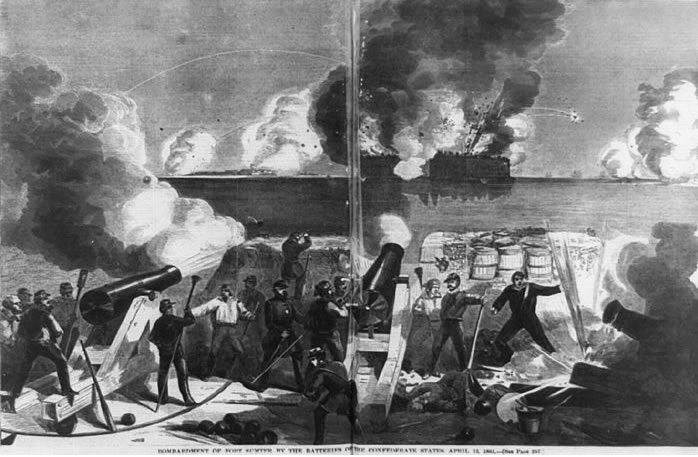
As war approached, President Lincoln sent provisions to American forts that were now in Confederate territory, including Fort Sumter, near Charleston Harbor, South Carolina. Secessionists in South Carolina considered this an act of war and began bombarding the fort on April 12, 1861. Union forces at Fort Sumter surrendered and thus, the American Civil War began. On April 15, Abe requested the mobilization of 75,000 troops from the states for the purposes of "preserving the Union." In the following days, North Carolina, Tennessee, Arkansas, and Virginia seceded from the Union, refusing to mobilize against their southern neighbors. The secession of Virginia, one of the most populous states in the country, was a major prize for the Confederacy. To reward it, the Confederate capital was moved from Montgomery, Alabama to Richmond, Virginia.
Managing the War
As Union troops descended from Massachusetts to the nation's capital, pro-secession residents of Baltimore, Maryland attacked Union soldiers and destroyed railroads linking Washington to the north. In response, President Lincoln suspended the Writ of Habeas Corpus in Maryland, allowing the Government to arrest suspected perpetrators and keep them in jail indefinitely without a trial or conviction. He also authorized the blockades of southern ports. During this difficult time, Abe was also suffering depression likely caused by the stresses of the war, the death of his son Willie, and the increasingly erratic behavior of his mourning wife. Later in 1861, Abe endured an embarrassing and potentially dangerous episode, when the British ship Trent was intercepted by the Union Navy in the Atlantic Ocean. Two Confederate agents on their way to England and France were seized and brought back to America as prisoners. Although the American public was in full support of the illegal seizure, England considered it an act of war. Eventually, Lincoln was compelled to release the Confederate agents to avert the British threat. Despite the demands of England, however, Abe never issued a formal apology and hostilities between England and America died. Abe had other things to worry about as well. Union forces had been routed in the war's first major battle at Manassas, just thirty miles west of Washington. This was a major blow to the morale of the North, which underestimated the resolve and fight of the Confederacy. After the devastation at Manassas, Abe realized the war would not end any time soon. Throughout 1861 and much of 1862, Abe became dissatisfied with the progress of the war and turned his attention to leadership in the major branch of the Union Army, the Army of the Potomac. Early in 1862, Lincoln replaced War Secretary Simon Cameron with Edwin M. Stanton. Stanton would prove an excellent choice. His tireless work effort and superb managerial skills helped organize the massive military efforts of the Union.

Lincoln's Childhood | Middle Years | Presidential Years
Leadership in the Union Army
After the First Battle of Bull Run, Lincoln had appointed West Point graduate General George McClellan as Commander of the Army of the Potomac. McClellan set his sights upon the capture of the Confederate capital of Richmond. In what he called the Peninsula Campaign, McClellan planned to move the huge army by boat to the Eastern Shore (Peninsula) of Virginia and then over land to Richmond itself. McClellan, however, took an inordinate amount of time planning and mobilizing the movements, and challenged the president's authority several times in the process. Furthermore, McClellan was slow to strike when he had the opportunities and always exaggerated the number of enemy troops waiting to engage his army.
On September 16, 1862, the Union Army scored a major victory at Sharpsburg, Maryland in what came to be known as The Battle of Antietam. Antietam would prove to be the bloodiest one-day battle of the war. The battle forced the battered Confederate Army under General Robert E. Lee to cross the Potomac River back into Virginia and foiled Lee's attempt to carve a path of military victories in Union territory. Despite the urgings of the President and Congress, McClellan failed to order his army to pursue the fleeing Confederates, enabling them to regroup in their own territory. Lincoln, having had enough of McClellan's indecision and insubordination, replaced him as commander of the Army of the Potomac. Finding a suitable replacement, however, would prove no easy task. In fact, Lincoln went through several more commanders before settling on General Ulysses S. Grant.
The Slavery Issue
From the time the war had started, Lincoln had wrestled with himself and members of his cabinet concerning the proper timing of emancipating slaves in the South. With the momentum of the war swinging back to the Union, and on the heels of the major victory at Antietam, Lincoln issued his famous Emancipation Proclamation on September 22, 1862 to be effective on January 1, 1863. The decree freed all slaves in "enemy territory." The proclamation, however, failed to address slavery in the border states. Lincoln believed forcing the border states of Kentucky, Maryland, Delaware, and Missouri to free their slaves would push them to join the Confederacy. Despite his failure to free slaves in the border states, Lincoln believed that slavery would die as long as it did not extend into new territories.
Despite the Emancipation Proclamation, Lincoln maintained his primary goal was not the liberation of slaves, but rather, the preservation of the Union. In fact, Lincoln believed the best plan of action for the newly freed slaves was to set up a colony for them in Africa. Lincoln enjoyed little if any support for the plan, and by 1863 abandoned the idea. By the end of 1863, Lincoln had formulated a plan to recruit Black soldiers to the Union Army in the belief that "the bare sight of 50,000 armed and drilled black soldiers on the banks of the Mississippi would end the rebellion at once."
Good News for the Union
July of 1863 would prove a major turning point in the war. On July 3, the Army of Northern Virginia led by Robert E. Lee was repulsed at Gettysburg, Pennsylvania in arguably the most storied battle in American history. The following day, on July 4, 1863, General Ulysses S. Grant and Union forces took Vicksburg, Mississippi after a long siege, gaining control of the Mississippi River for the Union Army and splitting the Confederacy into two separate parts. For Lincoln, control of the Mississippi River, its ports, and its navigation, were one of the main objectives in eventual military victory.
Lincoln's Childhood | Middle Years | Presidential Years
Gettysburg, Grant, and Re-election
After the historic victories at Gettysburg and Vicksburg, the situation had vastly improved for the Union, but the war was far from over. On November 22, 1863, President Lincoln delivered the Gettysburg Address at the dedication of the Soldiers National Cemetery at Gettysburg. The 272 word speech, which followed a two hour address by Harvard professor Edward Everett, would become one of the greatest speeches in American history.
In March of 1864, President Lincoln appointed General Ulysses S. Grant Commander of the Army of Potomac, the main branch of the Union Army. Finally, after nearly three years of war, the President had found a general who would pursue fleeing Confederates. Grant, known as "Unconditional Surrender Grant" after his exploits at Fort Donelson, Tennessee, in 1862, was by this time a Union hero after leading the Army of theTennessee to numerous victories in the West, including those at Shiloh and Vicksburg. Grant would spend 1864 waging his bloody Overland Campaign through much of the state of Virginia, suffering massive casualties while gradually diminishing the numbers and spirit of Lee's Army of Northern Virginia. Eventually, Grant would corner Lee's Army at Petersburg, Virginia, where he staged a ten-month siege. During the siege, Lincoln would visit Grant's headquarters at City Point, outside of Petersburg, where his presence excited and inspired the Union soldiers.
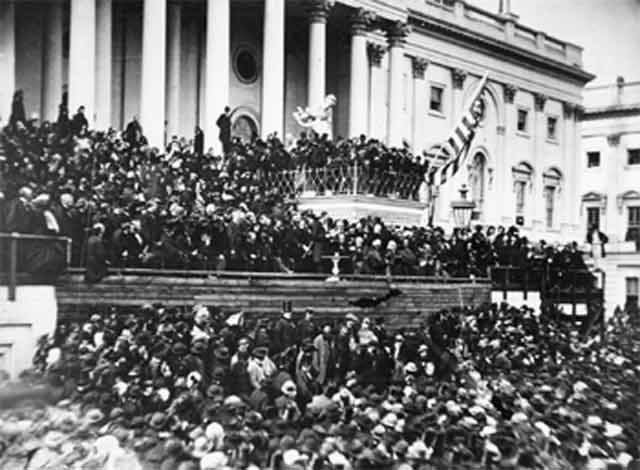
Meanwhile, Union General William T. Sherman struck another blow to the spirit of the Confederacy with his destructive march through the state of Georgia, which would become known as Sherman's March to the Sea. Sherman's Army destroyed farms, railroad lines, and virtually anything in its path. After Sherman's capture of Atlanta, Georgia, President Lincoln easily won re-election to a second term. In contrast to his campaign platform in 1860, Lincoln made the emancipation of slaves a primary emphasis. Over 78 percent of Union soldiers would support his bid for a second term as President. In anticipation of the war's end, President Lincoln
War Ends and Reconstruction Begins
On April 9, 1865, the Confederate States of America surrendered at Appomattox Courthouse, Virginia. The Civil War was over and the Union would be preserved. At this point, President Lincoln had to consider the complicated task of reconstructing the Union and how to re-integrate the Confederate states back into the United States.
Lincoln believed in a policy of forgiveness and took a moderate approach to reconstruction, hoping to reconstruct the Union as quickly as possible rather than indefinitely punish the rebel states. Unfortunately, the President did not have much of a chance to preside over Reconstruction. Just five days after the end of the war, Southern sympathizer and actor John Wilkes Booth assassinated the President while he was watching a play at Ford's Theater in Washington, D.C. Lincoln's bodyguard had apparently fallen asleep, allowing Booth access to the Presidential box. Lincoln died at 7:22 the next morning at the Peterson House across the street from the theater. Upon his death, Secretary of War Edwin M. Stanton uttered the timeless words "Now, he belongs to the ages."
Vocabulary
Click the highlighted vocabulary words throughout the article to see their definitions.
Discussion Questions
- How did Lincoln’s limited formal schooling affect the way he educated himself throughout his life?
- How did Lincoln’s experiences as a lawyer, legislator, and political speaker prepare him for national leadership?
- How did Lincoln’s public position on slavery change from the 1830s through the Civil War?
- Why were the victories at Gettysburg and Vicksburg important to Lincoln’s military strategy and the Union war effort?