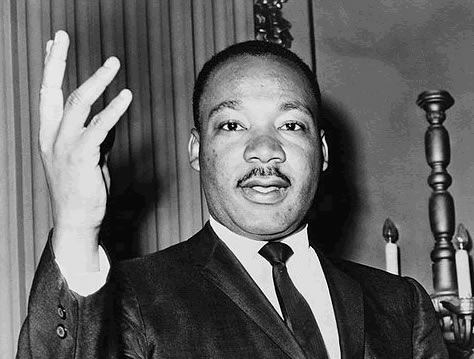
Introduction
The reverend Dr. Martin Luther King Jr. was one of the most influential and inspirational Civil Rights leaders in American history. Born in 1929, King graduated from Morehouse College in 1948 and then from the Crozer Theological Seminary with a Bachelor's in Divinity in 1951. He received a Ph.D in Systematic theology in 1955 from Boston University.
Standing with Rosa Parks
In 1954, King became pastor of the Dexter Avenue Baptist Church in Montgomery, Alabama where he led the bus boycott in Montgomery, Alabama after Rosa Parks was arrested for refusing to give up her seat on a public bus. The boycott lasted 381 days and resulted in King being arrested. Despite his arrest, the boycott ultimately resulted in the Supreme Court outlawing discrimination on intrastate buses.
Perfecting the Peaceful Protest
After the boycott, King helped in the founding of the Southern Christian Leadership Conference (SCLC) which advocated the peaceful protest of Black churches concerning Civil Rights (especially in the American south). Primarily inspired by the non-violent protests conducted by Mahatma Gandhi in India, King was instrumental in helping his cause gain national attention through the media. Because of his efforts, civil rights became the top political issue of the early 1960's.
He Had a Dream
In 1963, King delivered the immortal speech "I have a Dream" in front of the Lincoln Memorial during the March on Washington. Over 250,000 people gathered around the National Mall in support. King's speech electrified the crowd and is considered one of the greatest speeches in American history. King later led protests and gave speeches for the African American right to vote, desegregation, and fair hiring.
King is Instrumental in the Passing of the Civil Rights Act of 1864
In 1964, King's hopes were realized when congress passed the Civil Rights Act of 1964 and then, the Voting Rights Act of 1965. On October 14, 1964, King was awarded the Nobel Peace Prize for his leadership in non-violent protest.
Anti-war Sentiments
King became a prominent political figure and expressed his opposition of American involvement in the Vietnam War. In 1967, King called America "the greatest purveyor of violence in the world today." Although King was always hated by southern white segregationists, his speech against America turned many in mainstream media against him.
Assassination
In 1968, while he was organizing a march to protest the working conditions of black sanitation workers in Memphis, Tennessee, he was assassinated by James Earl Ray at the Lorraine Hotel. Because he was under FBI surveillance at the time, many believe the agency was involved in the assassination (although there is no proof). Furthermore, some reports have suggested that the FBI, and its chief officer J. Edgar Hoover, threatened to reveal evidence of extra-marital affairs King engaged in if he refused to curtail his Civil Rights efforts.

Powerful Legacy
300,000 people attended King's funeral. President Lyndon B. Johnson declared a national day of mourning. Today, numerous schools, buildings, and highways are named for Martin Luther King Jr. In 1986, a U.S. national holiday was established in honor of Martin Luther King Jr., which is called Martin Luther King Day. It is observed on the third Monday of January each year, around the time of King's birthday. On January 18, 1993, for the first time, Martin Luther King Day was officially observed in all 50 U.S. states. Below is an excerpt from King's famous I have a Dream speech.
Discussion Questions
- How did the Montgomery bus boycott help transform King from a local pastor into a national civil rights leader?
- Why was nonviolent protest effective in drawing national attention to segregation and discrimination?
- How did King’s goals broaden from desegregation and voting rights to include poverty and the Vietnam War?
- Why is it important to distinguish the documented FBI campaign against King from claims about FBI involvement in his assassination?