Permian Period
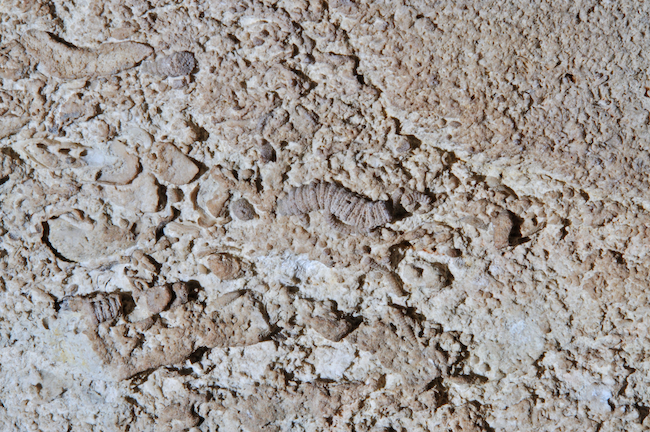 |
| Permian Period Fossils |
Image Credit: National Park Service - Public Domain |
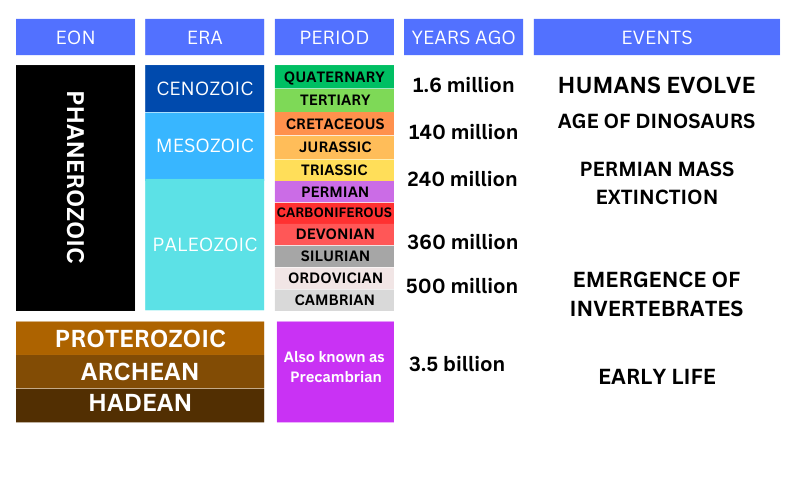
The Permian Period, spanning from approximately 298 to 252 million years ago, represents a climactic chapter in Earth's history. This epoch, situated at the close of the Paleozoic Era, witnessed the assembly of the supercontinent Pangaea, the flourishing of diverse life forms, and the dramatic climax of the Permian-Triassic mass extinction, one of the most significant extinction events in Earth's history.
Continental Assembly and Paleogeography
At the onset of the Permian, Earth's continents were in the process of converging to form the supercontinent Pangaea. This colossal landmass brought together the major continental blocks, reshaping the planet's geography and influencing global climate patterns. The formation of Pangaea also led to the emergence of vast inland seas, creating unique marine environments that fostered the evolution of diverse marine life.
The Rise of Amphibians and Reptiles
The Permian witnessed the continued evolution and diversification of amphibians, including the emergence of large and terrestrial forms. However, the most notable development during this period was the rise of reptiles, marking a critical transition from amphibian-dominated ecosystems. Early reptiles, including synapsids and diapsids, adapted to a variety of ecological niches, from terrestrial habitats to the semi-aquatic.
Permian Flora and the Evolution of Seed Plants
On land, the Permian showcased the evolution and spread of seed plants, a group that would later give rise to modern gymnosperms and angiosperms. The emergence of seed plants represented a significant step in the colonization of terrestrial environments, offering new strategies for reproduction and dispersal.
Climate Extremes: Glaciation and Hothouse Conditions
The Permian was a period of climatic extremes, with the early part experiencing glaciation in the Southern Hemisphere and the latter part marked by hothouse conditions. Glacial deposits in Gondwana, evidence of a cold climate, are juxtaposed with the later formation of extensive evaporite deposits, suggesting arid and hot conditions. These climatic shifts influenced the distribution of flora and fauna, contributing to the dynamic nature of Permian ecosystems.
The Great Dying: Permian-Triassic Mass Extinction
The Permian-Triassic mass extinction, also known as the "Great Dying," unfolded at the close of the Permian Period, resulting in the loss of an estimated 90% of marine species and 70% of terrestrial vertebrate species. The causes of this catastrophic event are complex and involved volcanic activity, climate change, and oceanic disruptions. The consequences of the Great Dying had profound and lasting effects on the evolution of life on Earth, paving the way for the rise of new species and the subsequent Mesozoic Era.