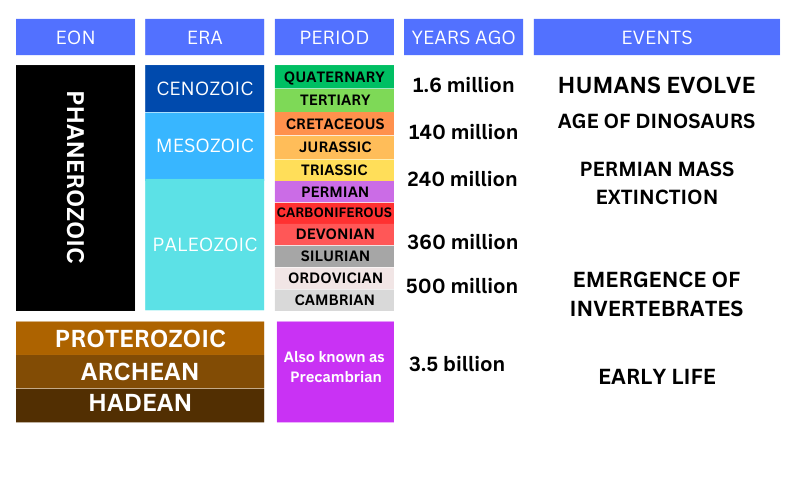
Devonian Period
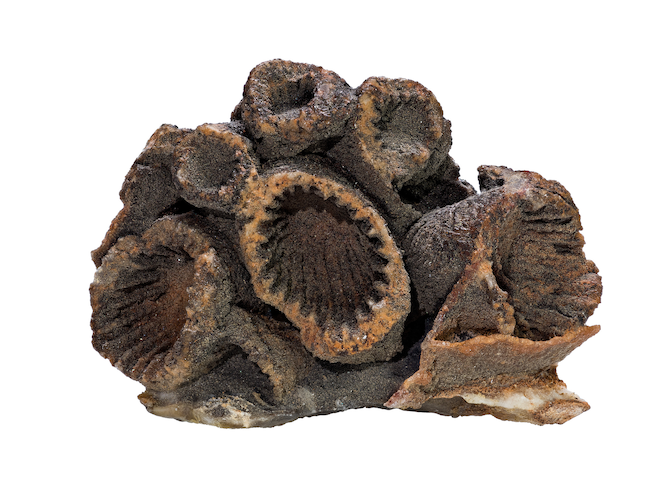 |
| Devonian Period Coral |
Image Credit: National Park Service - Public Domain |
The Devonian Period, spanning from approximately 419 to 359 million years ago, represents a critical juncture in Earth's history, characterized by significant geological and biological transformations. Often referred to as the "Age of Fishes," the Devonian witnessed the diversification of marine life, the colonization of land by early plants, and the emergence of complex ecosystems that laid the groundwork for subsequent evolutionary developments.
Paleogeography and Climate
At the onset of the Devonian, Earth's continents were arranged in configurations distinct from the present-day, forming the supercontinent Gondwana in the Southern Hemisphere and Laurentia in the Northern Hemisphere. The climate was generally warm, with equable conditions contributing to the expansion of diverse ecosystems.
The Rise of Jawed Fish
One of the defining features of the Devonian is the evolutionary success of jawed fish. Unlike their jawless predecessors, these fish possessed hinged jaws, providing them with a formidable advantage in capturing prey. The diverse array of jawed fish, including placoderms and early cartilaginous fish, played a crucial role in shaping the marine ecosystems of the time.
Devonian Flora: The Greening of the Land
The Devonian marks a pivotal stage in the colonization of land by plants. Early land plants, such as liverworts and mosses, began to establish themselves in terrestrial environments. The development of vascular tissues allowed some plants to grow taller and more structurally complex, paving the way for the evolution of larger and more diverse vegetation in subsequent periods.
Arthropod Adaptations
The Devonian saw the continued evolution and diversification of arthropods, including early forms of insects and arachnids. The transition of some arthropods to terrestrial habitats played a crucial role in terrestrial ecosystems, contributing to the complex web of interactions between plants and animals.
The Devonian Extinction Events
While not as severe as some later mass extinctions, the Devonian Period witnessed several extinction events, particularly affecting marine life. These events were likely influenced by environmental changes, such as sea-level fluctuations and shifting oceanic conditions, which had cascading effects on marine ecosystems.
The Evolution of Tetrapods
Towards the end of the Devonian, a significant evolutionary milestone occurred with the emergence of tetrapods—four-limbed vertebrates—representing the transition from fish to land-dwelling vertebrates. Early tetrapods, such as Acanthostega and Ichthyostega, had limbs with digits, marking a key step in the colonization of terrestrial environments.