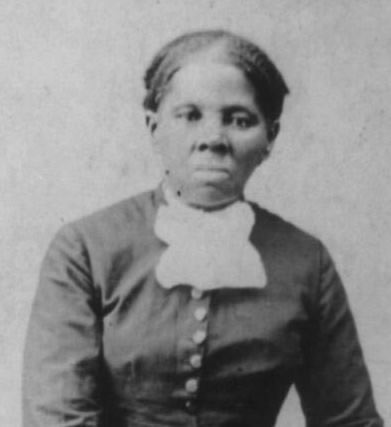
Childhood in Slavery
Harriet Tubman was one of the most famous American women in history. She was born on March 10, 1821, in Dorchester County, Maryland, the daughter of slaves on a Maryland plantation. Her original name was Araminta Ross and she was nicknamed “Minty.” From an early age she worked as servant at the plantation house. As a teenager, she suffered a vicious head wound as she tried to protect a fellow slave from a beating. According to legend, the woman who was beating the other slave hurled a two pound weight, hitting Harriet in the head. Her injury would haunt her for the remainder of her life, resulting in periodic fainting spells.
Escape to Freedom
Tubman spent her early life as a slave. In 1844, she married a free Black man named John Tubman. Life as a slave was extremely difficult. Enslaved people were forced to work in the heat without rest, were often beaten, and could be sold away from their families. Fearing that she was about to be sold, Harriet resolved to run away. Despite the brutal punishment that would be inflicted upon her if she was caught, Harriet took off in the middle of the night sometime in 1849 and headed north to freedom. She gained assistance along the way from abolitionist Quaker families. She traveled by night through the woodlands of Maryland and eventually made it to Philadelphia, Pennsylvania, a free city where she landed a job and saved money.
The Underground Railroad
After living in Philadelphia for two years, Harriet decided to return to Maryland in the hopes of freeing family members. She succeeded in guiding family members to freedom. This path became known as the Underground Railroad, a network used by people escaping slavery with the help of abolitionists and others.
A Daring Conductor
Soon, Harriet became known as a “conductor” on the Underground Railroad and made more daring trips south to guide more enslaved people to freedom. Harriet devised strategies to avoid capture. She made sure that she traveled on Saturdays because runaway notices in southern newspapers could not be printed until Monday. Her journeys continued despite the danger and rewards offered for the capture of people escaping slavery.
Civil War and Later Life
By 1860, the biography states that Tubman had completed 19 successful journeys on the Underground Railroad, freeing between 60 and 70 slaves. She was never captured, nor were any of her “passengers.” During the Civil War, she served as a cook, nurse, and spy for the Union army. After the war, she settled in New York, where she died in 1913.
Discussion Questions
- Why did Harriet Tubman decide to escape from slavery?
- How did the Underground Railroad help people seeking freedom?
- What strategies did Tubman use to reduce the risk of capture?
- How did Tubman's work change during the Civil War?