White Spruce
|
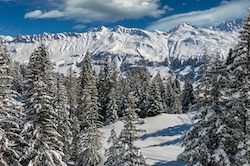
The White Spruce (Picea glauca) stands tall and resilient in the boreal forest, imparting a vital role in the northern landscapes of North America. Found throughout the boreal forest, these majestic trees can reach heights of 130 feet. Recognizable by its slender form and blue-green needles, this evergreen species thrives in the cold and challenging climates of the region. White Spruce forests dominate vast areas, providing crucial habitat for diverse wildlife. Their cones, containing seeds adapted for wind dispersal, contribute to forest regeneration. Valued for their wood, these conifers are used in construction and various wood products. |
Black Spruce
|
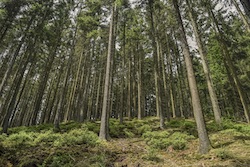
Found throughout the boreal forest, the Black Spruce (Picea mariana) is the official tree of Labrador and Newfoundland. It is also found in the northern and northeastern United States. Slow growing, black spruce trees reach heights of 15-50 feet - much shorter than white spruces. Characterized by its pyramid-shaped crown and dark green needles, this evergreen species is well-adapted to cold, acidic soils. Black Spruce plays a pivotal role in shaping the boreal landscape, forming extensive stands across the region. Its cones, which release seeds in response to fire, contribute to forest regeneration. Valued for its timber and pulpwood, the Black Spruce holds economic importance. Interestingly, black spruce wood is often used to make mass-produced chopsticks. |
Jack Pine
|
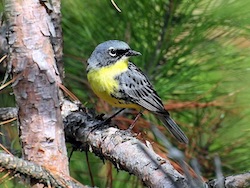
The Jack Pine (Pinus banksiana) thrives in the challenging environments of the boreal forest. Found throughout the taiga belt, and parts the northeastern United States, jack pines can reach heights of 70 feet, although most are much shorter and some are shrubs. With its twisted branches and serotinous cones that release seeds in response to fire, jack pines play a crucial role in post-fire regeneration. Adaptable to nutrient-poor soils, these evergreens form extensive stands in both rocky and sandy soils. Jack pines in northern Michigan are essential to the survival of the Kirtland's Warbler, a tiny endangered bird that only breeds in jack pines. Interestingly, wild blueberries often grow in the understory of jack pine forests. |
Lodgepole Pine
|
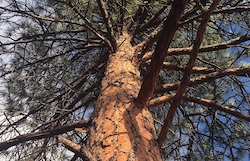
The Lodgepole Pine (Pinus contorta) in the boreal forest exhibits distinctive characteristics that define its role in northern ecosystems. Found in the western portions of the North America Boreal Forest, these trees can reach heights of 130 to 160 feet. Recognized for its tall, straight trunk and slender form, the lodgepole pine adapts to various environments, from mountainous regions to coastal areas. Notably, its serotinous cones, sealed with resin, release seeds in response to fire, ensuring regeneration and stand renewal. This unique adaptation enables Lodgepole Pines to thrive in disturbed landscapes. Valued for timber, their wood is used in construction. These resilient pines, forming extensive stands, contribute to the ecological and economic richness of the boreal forest in North America. |
Balsam Fir
|
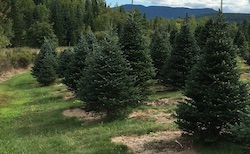
The Balsam Fir, scientifically known as Abies balsamea, stands as a resilient and aromatic conifer in the boreal and subalpine forests of North America. Found in the eastern and central portions of the North American Boreal Forest, the Balsam Fir is considered a relatively small evergreen, reaching heights of about 60 feet. Characterized by its slender form, dark green needles, and distinctive resin-filled blisters on the bark, the Balsam Fir contributes to the intricate biodiversity of these northern ecosystems. Its needles, which contain Vitamin-C, are eaten by both animals and humans. Adapted to cool and moist conditions, it thrives in well-drained soils and forms mixed stands with other coniferous species. Beyond its ecological importance, the Balsam Fir holds value for humans, as its wood is used in construction, and its aromatic needles find applications in the production of essential oils. |
Larch
|
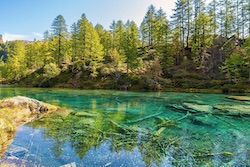
The Larch, or Tamarack (Larix laricina), adds a unique charm to the boreal forest with its deciduous coniferous nature. Unlike typical evergreens, the Larch sheds its needles in the fall, creating a stunning display of golden hues. Thriving in wetter areas, it contributes to the diverse mosaic of the boreal landscape. Known for its adaptability, the Larch plays a crucial role in ecosystem dynamics, providing habitat for various species and influencing nutrient cycling. Its seasonal transformation and ecological significance make the Larch a distinctive and valued component of the boreal forest in North America. |
Aspen
|
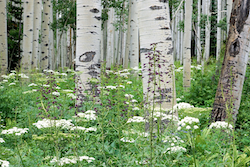
Aspen trees (Populus tremuloides) stand out in the boreal forest with their iconic quivering leaves and distinctive white bark with horizontal black scars. In the Boreal Forest, these trees are known as quaking or trembling aspens. They occur throughout the North American taiga belt and into the northern United States. Thriving in a variety of soils, these deciduous trees form expansive groves, contributing to the visual diversity of the northern landscapes. Known for their ability to regenerate through root suckering (shared root systems), aspens create interconnected communities. Aspens typically grow to 50 or 60 feet in height, but in rare cases can exceed 100 feet! Scientists are concerned about diebacks (grove death) in aspen groves. Tent caterpillars, beetles, fungus are thought to contribute to this aspen mortality. In addition, overgrazing by livestock and fire suppression are thought to prevent the regeneration of aspen groves. |
Paper Birch
|
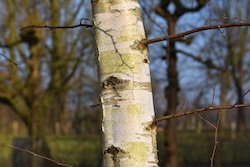
The Paper Birch (Betula papyrifera) graces the boreal forest with its distinctive white bark, offering a striking contrast to the surrounding conifers. Thriving in cold climates, these deciduous trees are well-adapted to the northern ecosystems of North America. Their peeling, paper-like bark not only adds visual appeal but also provides insulation against harsh winter conditions. Its bark is the main winter food source for moose. Its leaves feed white-tailed deer in the fall, its seeds are consumed by snowshoe hares, and its buds are eaten by grouse. Porcupines and beavers feed on its inner bark. Sapsuckers drill holes in the bark to make sap wells. Did you know that the sap of the paper birch is used to make a substance called birch syrup? Birch syrup is similar to maple syrup but much less sweet. |